
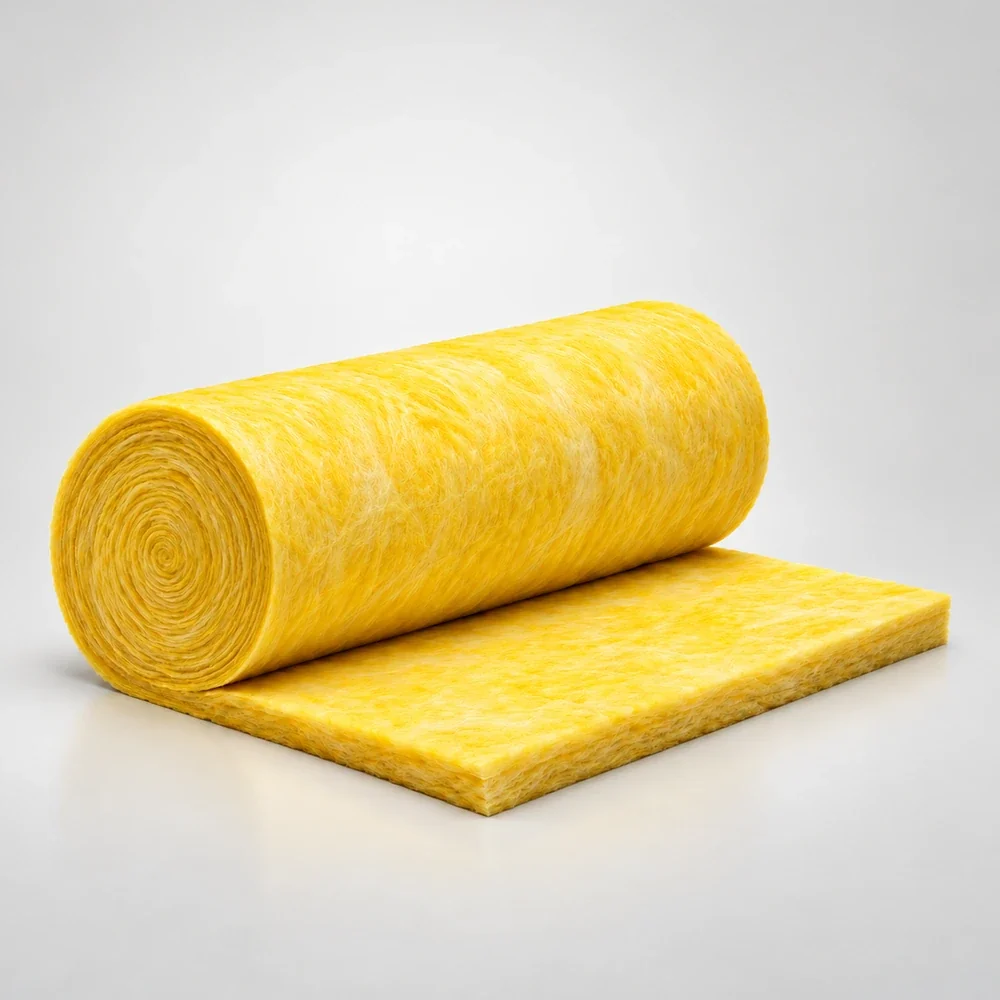
Duct wrap
What goes on most concealed supply and return ducts.
- Glass wool roll with aluminium foil
- Rockwool slab with aluminium foil
- Nitrile rubber sheet
- Duct board insulation (glass wool board)
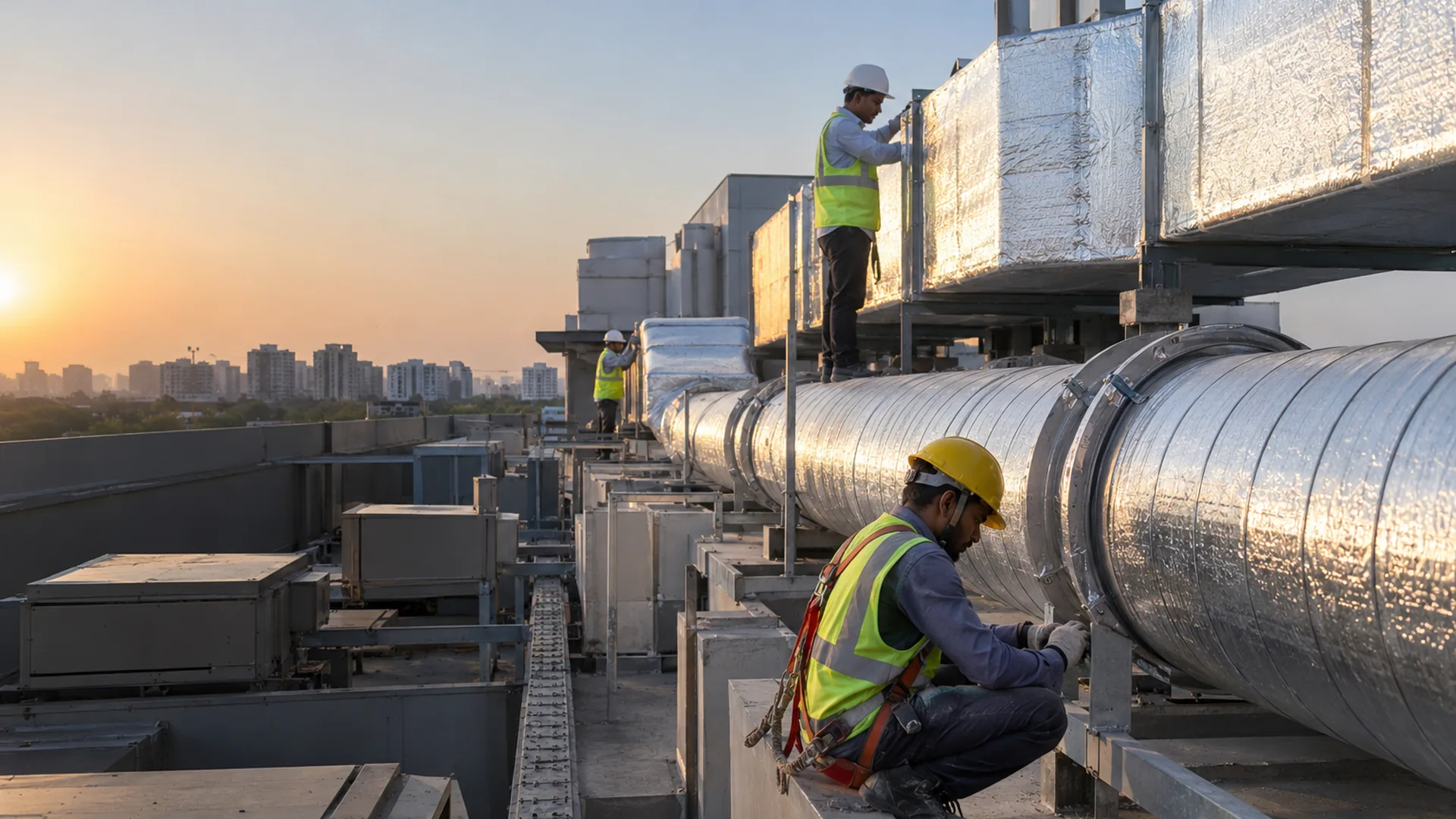
Duct wrap, pipe insulation and taping for AHUs, ducts and chilled water, fitted by our own crew.
Without properly insulated HVAC ductwork you're paying to cool the air and then paying again when the duct heats it back up on its way through a hot ceiling or over the terrace. Less cold air reaches the room than the AHU sent out, so the chiller runs for longer to catch up.
The other issue is condensation. Supply air is a lot colder than the dew point in most ceiling voids here, and where the vapour barrier has a break the duct gets wet on the outside. You see it as stained ceiling tiles, and in a clean room it becomes a problem for whoever handles validation. Insulating it properly fixes both.
What goes on most concealed supply and return ducts.
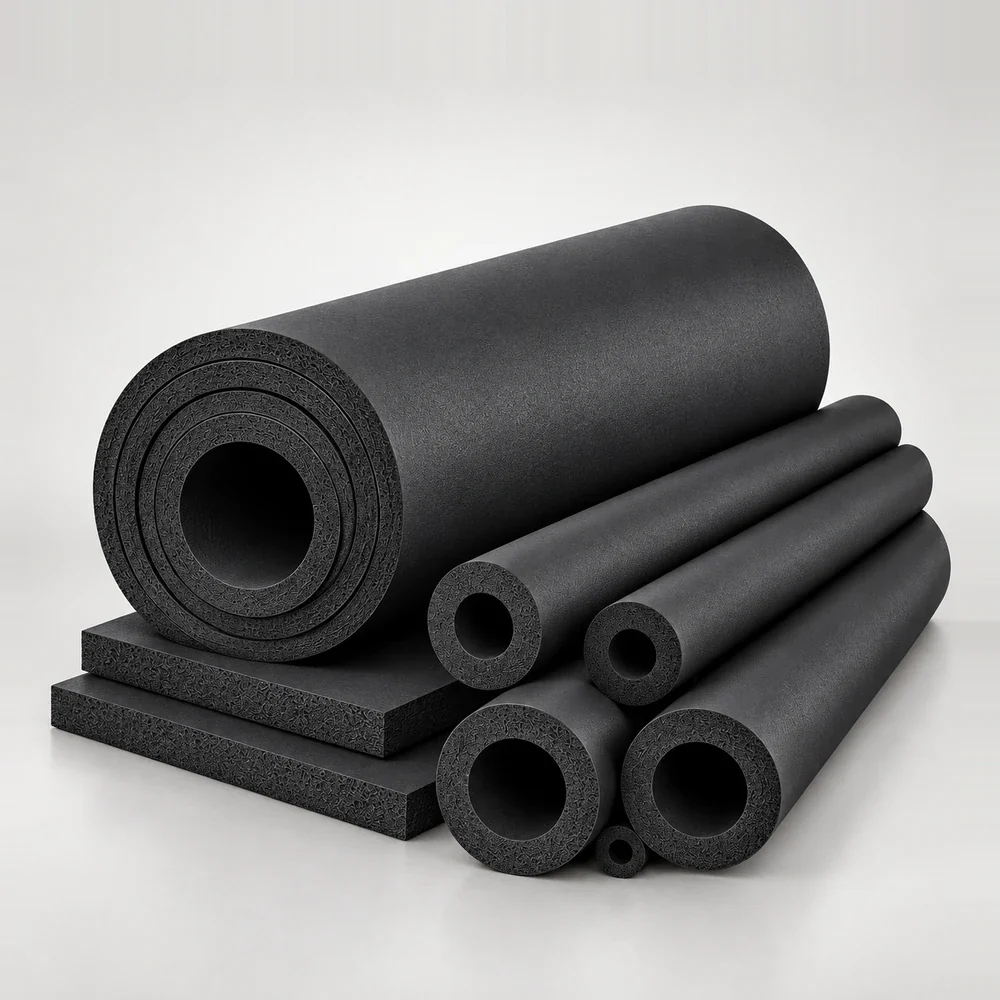
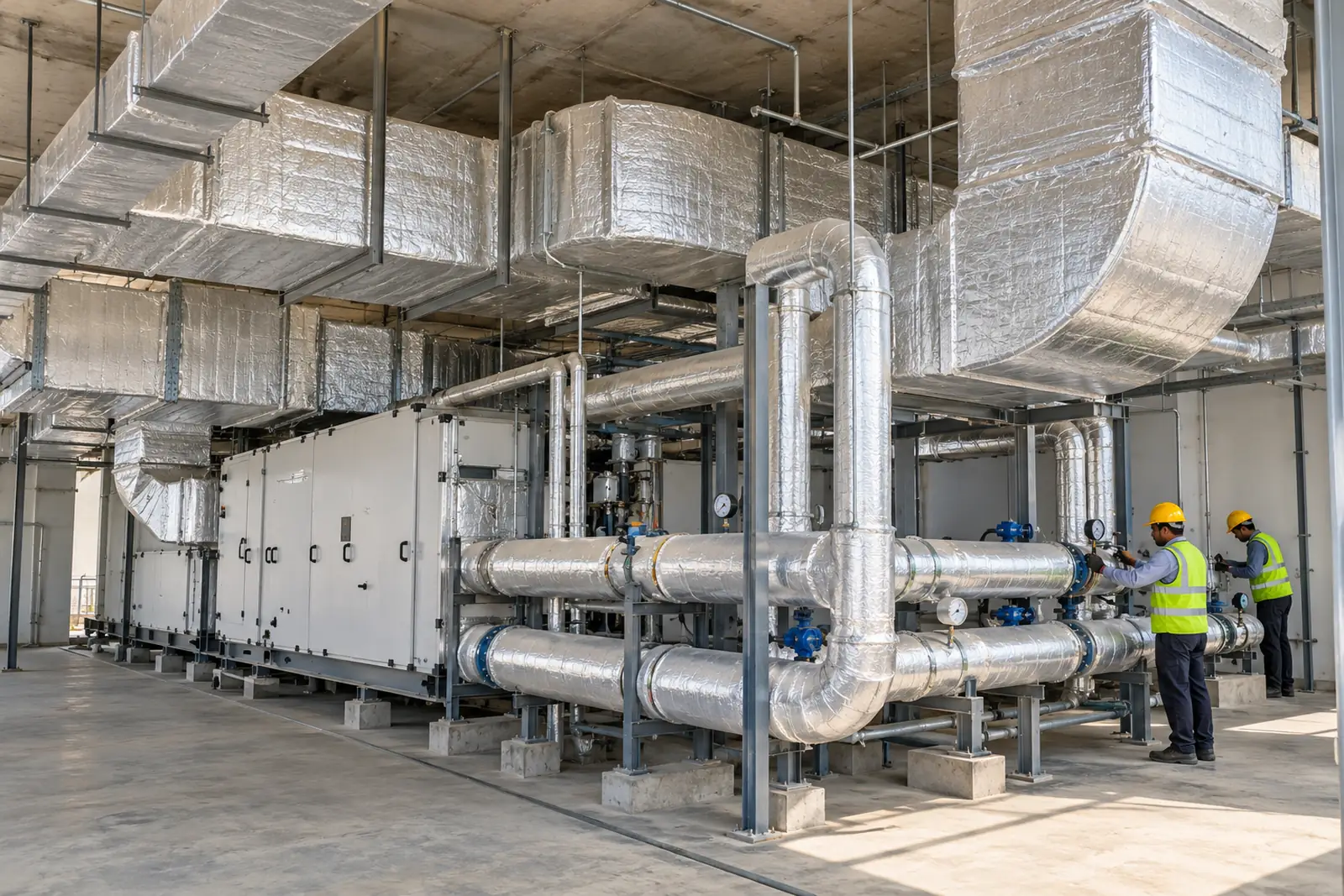
For the chilled water and drain lines.
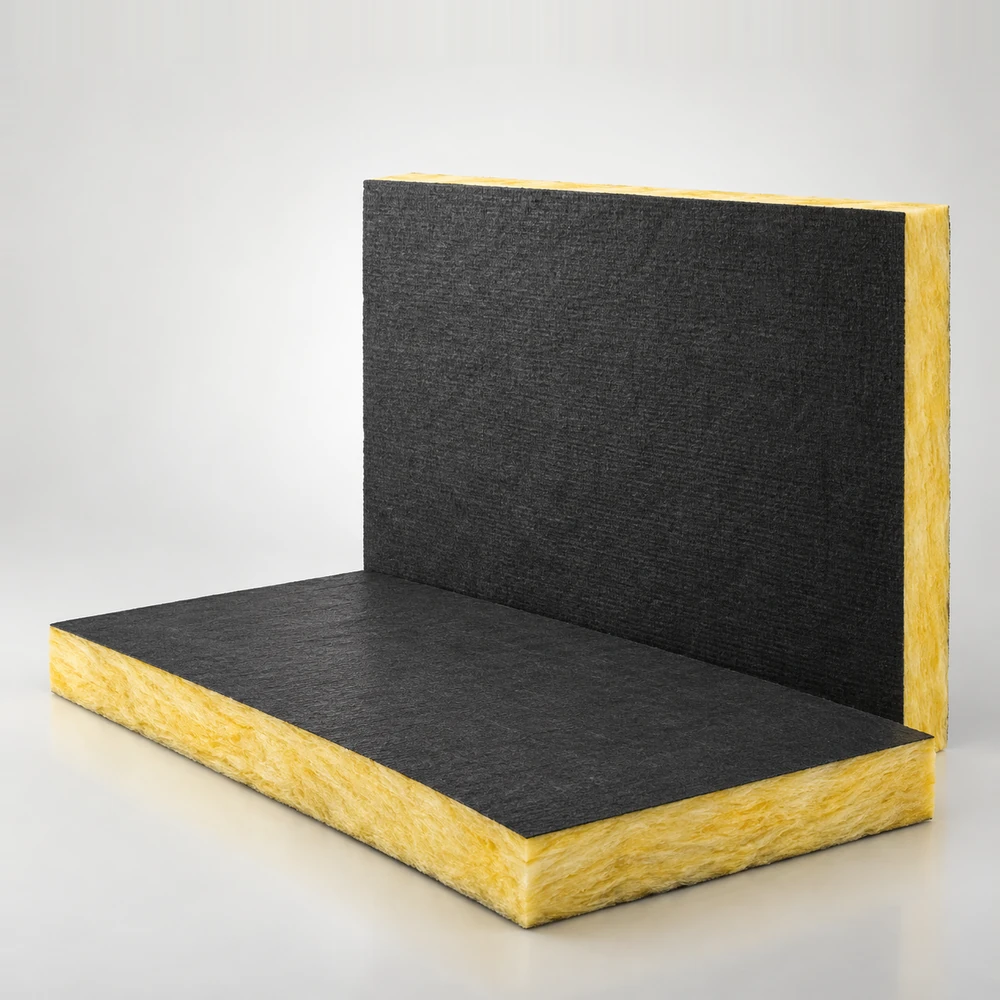
Near AHUs and fan rooms, where the noise follows the air.
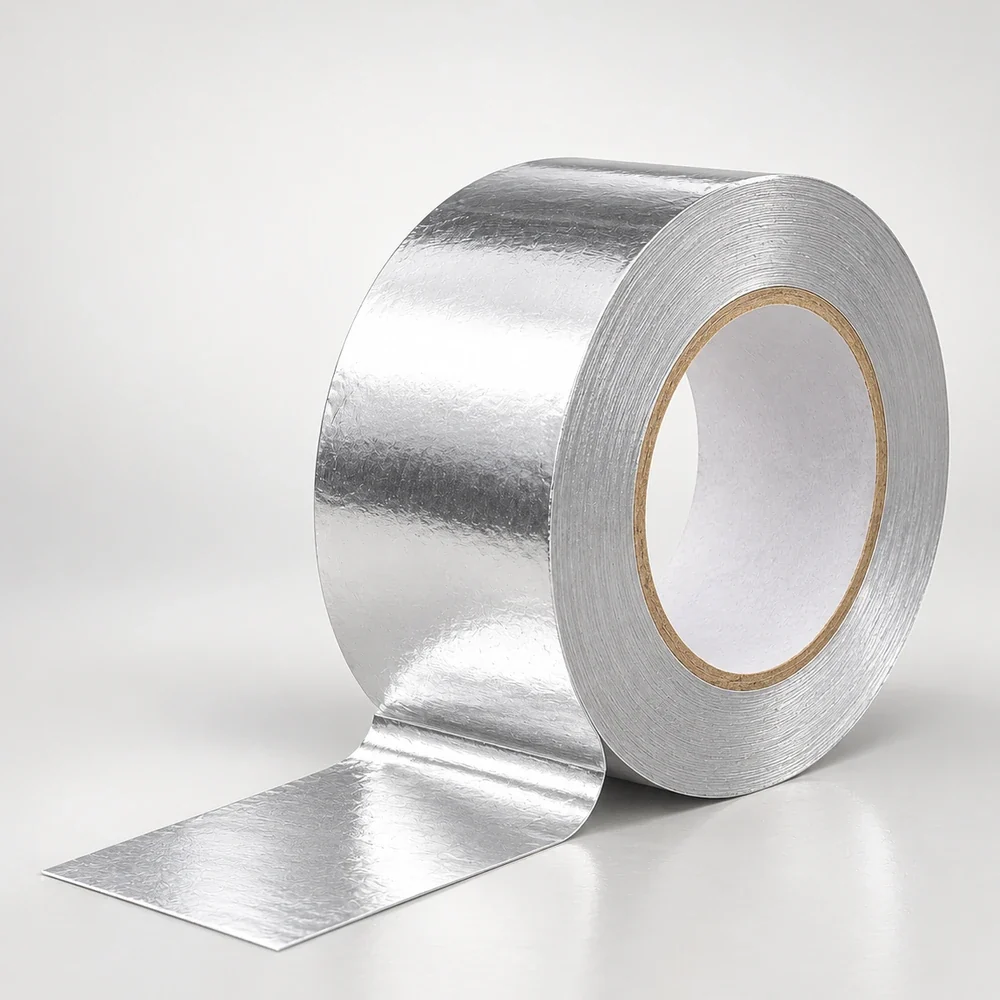
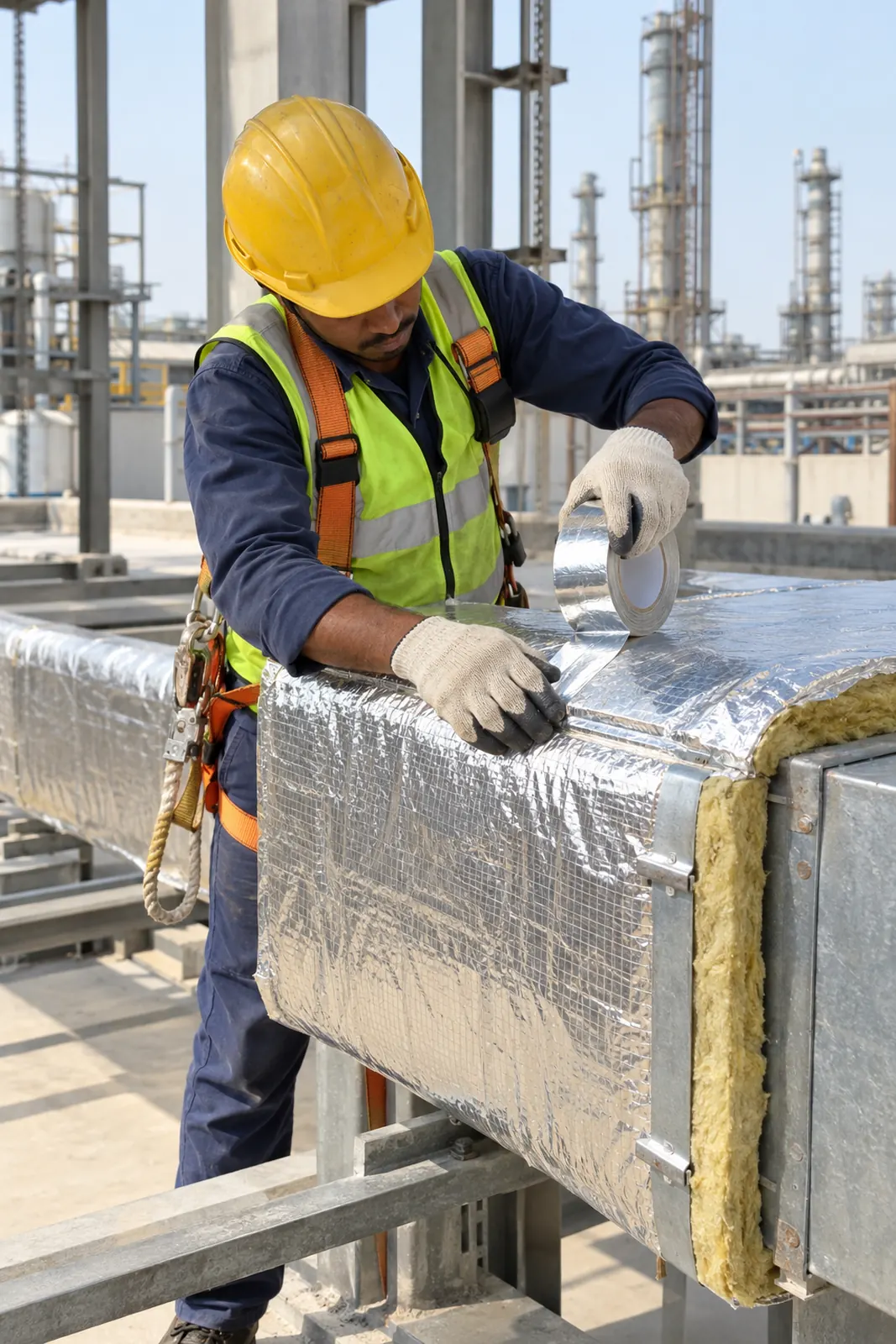
Tape and pins, basically, so the wrap stays up and the joints stay shut.
Above a ceiling we'd usually fit duct wrap insulation, either glass wool or nitrile rubber with a foil face, and tape all the seams. A duct out on the terrace is another story. It's in the sun all day, gets rained on all monsoon and people step on it, so it gets aluminium cladding over the insulation with the laps sealed.
Taping is where a lot of HVAC jobs quietly go wrong. Cheap tape peels within a year and the vapour barrier opens up with it. We use proper aluminium foil tape and FSK tape, pressed down hard on a clean, dry surface. Sounds like a small thing, but it's really the difference between a duct that stays dry and one that doesn't.
HVAC pipe insulation on chilled water lines follows the same rules as our cold work. Closed-cell nitrile, glue on every seam, insulated supports and no gaps left at valves. We ran a clean-utility job like that at a pharmaceutical unit in Ahmedabad, covering the AHU casings, the chilled water headers and the supply ducting.
How we work, the same four steps on a single line or a plant-wide shutdown.
We take duct sizes, run lengths and pipe sizes, and we look at what each ceiling void, shaft and terrace is actually like.
Duct wrap, pipe insulation and finish get written out area by area, indoor and outdoor separately, with the rate and dates.
Material comes from our stock, wrap goes on with pins and adhesive, every seam is taped and the outdoor runs get clad.
We measure up with your engineer, give you photos and the written warranty, and try to time it with your HVAC commissioning.
Still unsure? Send us the duty and a few photos and we will tell you what we would fit.
For ducts above a ceiling, foil faced glass wool or nitrile rubber duct wrap is the usual pick. Outdoor ducts need the same insulation plus an aluminium jacket. How thick depends on the air temperature and the space the duct runs through.
The cold air inside makes the outside of the duct colder than the dew point of the air around it. If there isn't enough insulation, or there's a gap in the barrier, water forms there. More thickness and sealed joints will usually sort it.
We do. New ducts get insulated during construction, and we also strip and redo old or damaged duct insulation in buildings that are already running, working around ceilings and people.
No. Duct wrap on the outside handles heat and condensation. Acoustic lining, inside the duct or near the fan, soaks up noise. A lot of systems need both close to the AHU.
We use aluminium foil tape or FSK tape on the duct wrap seams and duct flange tape on the joints. The main thing is that it sticks well to the facing, because tape that lifts lets the barrier open up.

Send the duct and pipe schedule, or just photos of where it's going wrong. We'll come back with a written spec and a rate.
clients so far, from refineries and power plants to pharma and textile units