Hot insulation
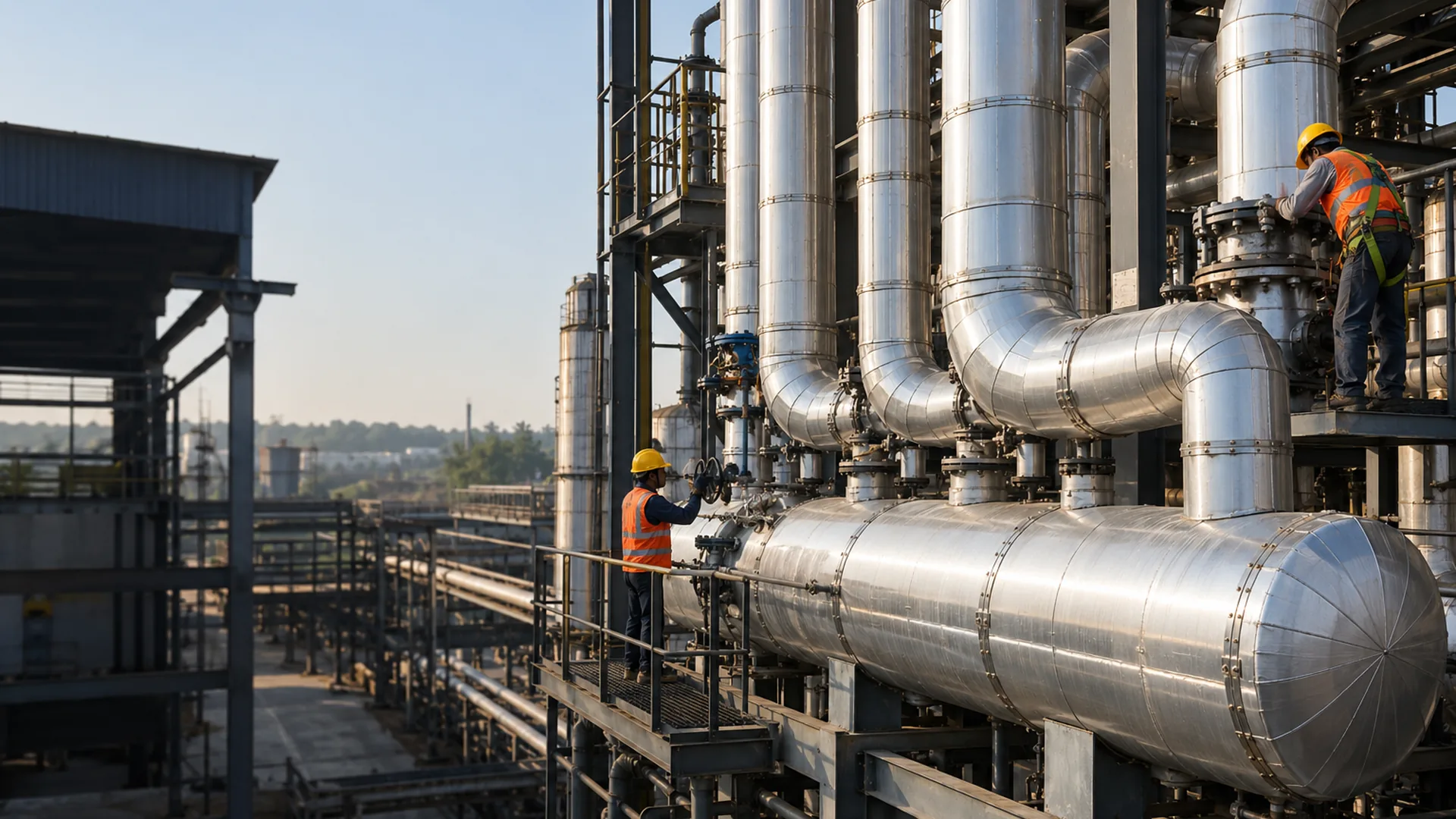
Steam lines, boilers, vessels, reactors, ESP casings and kilns, done in rockwool, glass wool or ceramic fibre with an aluminium, GI or stainless jacket on top.
Read more
Ten services, one company. We keep the stock in Ahmedabad and Morbi, and the people who fit it are ours too.
Funny thing, hardly anybody phones us to order 50 mm rockwool. What we actually hear is that a steam line’s too hot to walk past, the cold store pipes have been dripping since April, or the floor under some tin roof is unbearable by lunch. We start from that complaint and work back to the material, the thickness and a finish that’ll still be holding together in ten years.
We’ve been at it since 1998, and the count is past 20,000 projects now. Some of those were one line lagged over a Sunday. Others were plant-wide scopes jammed into a shutdown with crews working nights. The thing that hasn’t changed is that the same company holds the stock, writes the specification and sends the crew. A lot of mechanical insulation contractors in India subcontract at least one of those three, and that’s usually where things start slipping.
Pick the service for your duty, or send the line list and we will tell you which one fits.
Steam lines, boilers, vessels, reactors, ESP casings and kilns, done in rockwool, glass wool or ceramic fibre with an aluminium, GI or stainless jacket on top.
Read more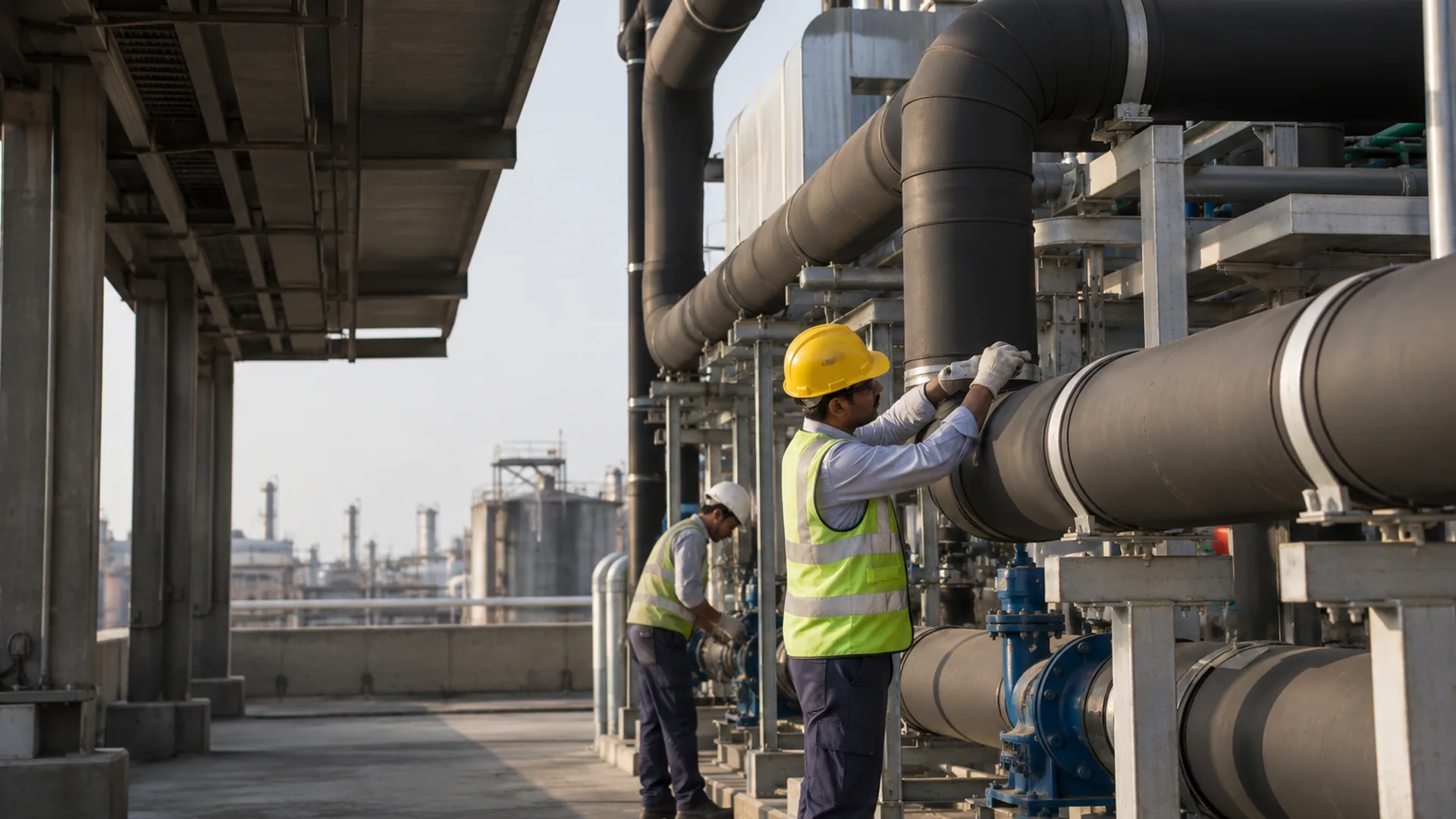
Chilled water, brine and refrigeration lines, where we fuss over every joint in the vapour barrier because that's what keeps the pipe dry.
Read more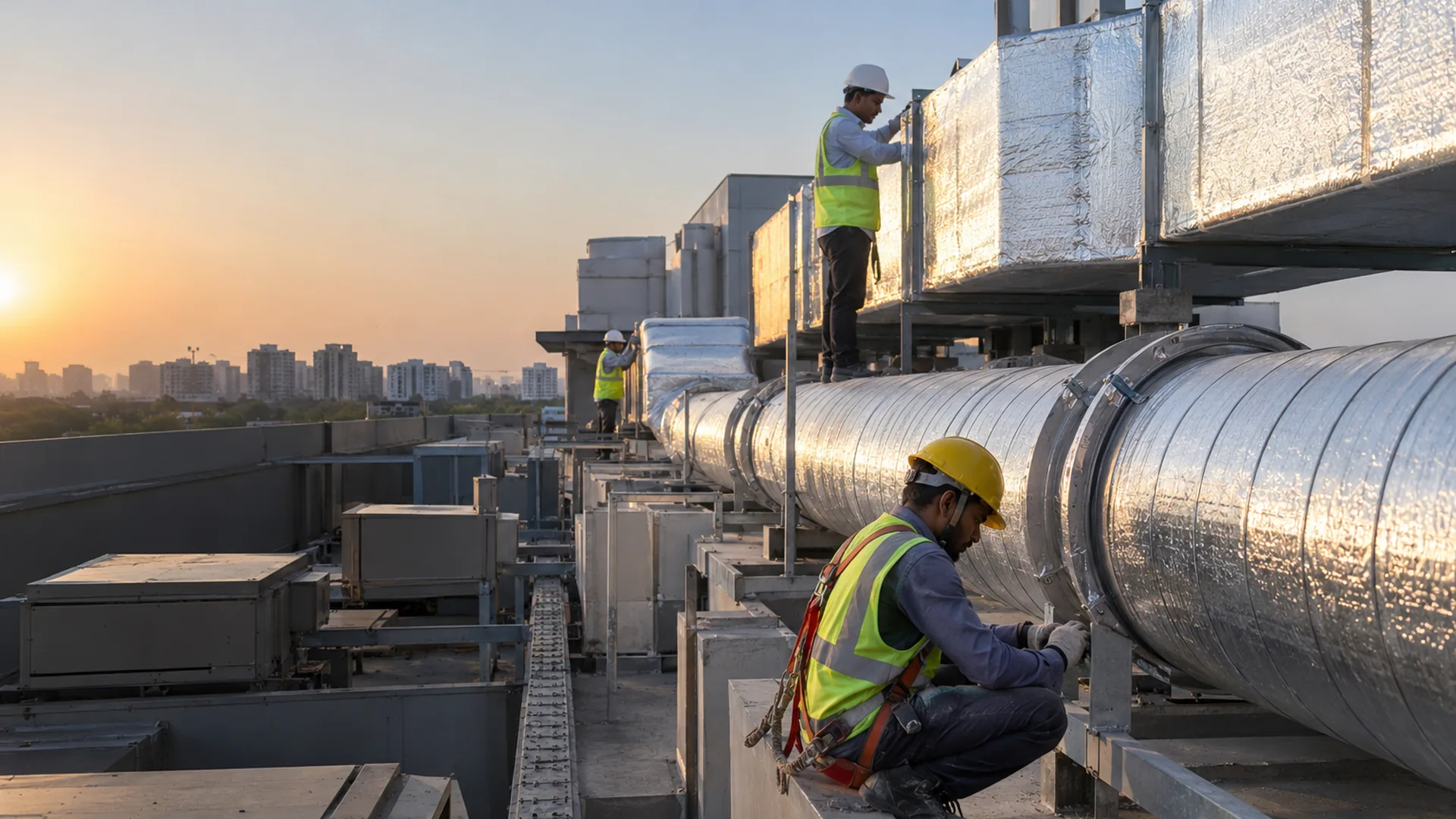
Duct wrap, AHU casings, chilled water headers and drain lines in offices, clean rooms and process air systems.
Read more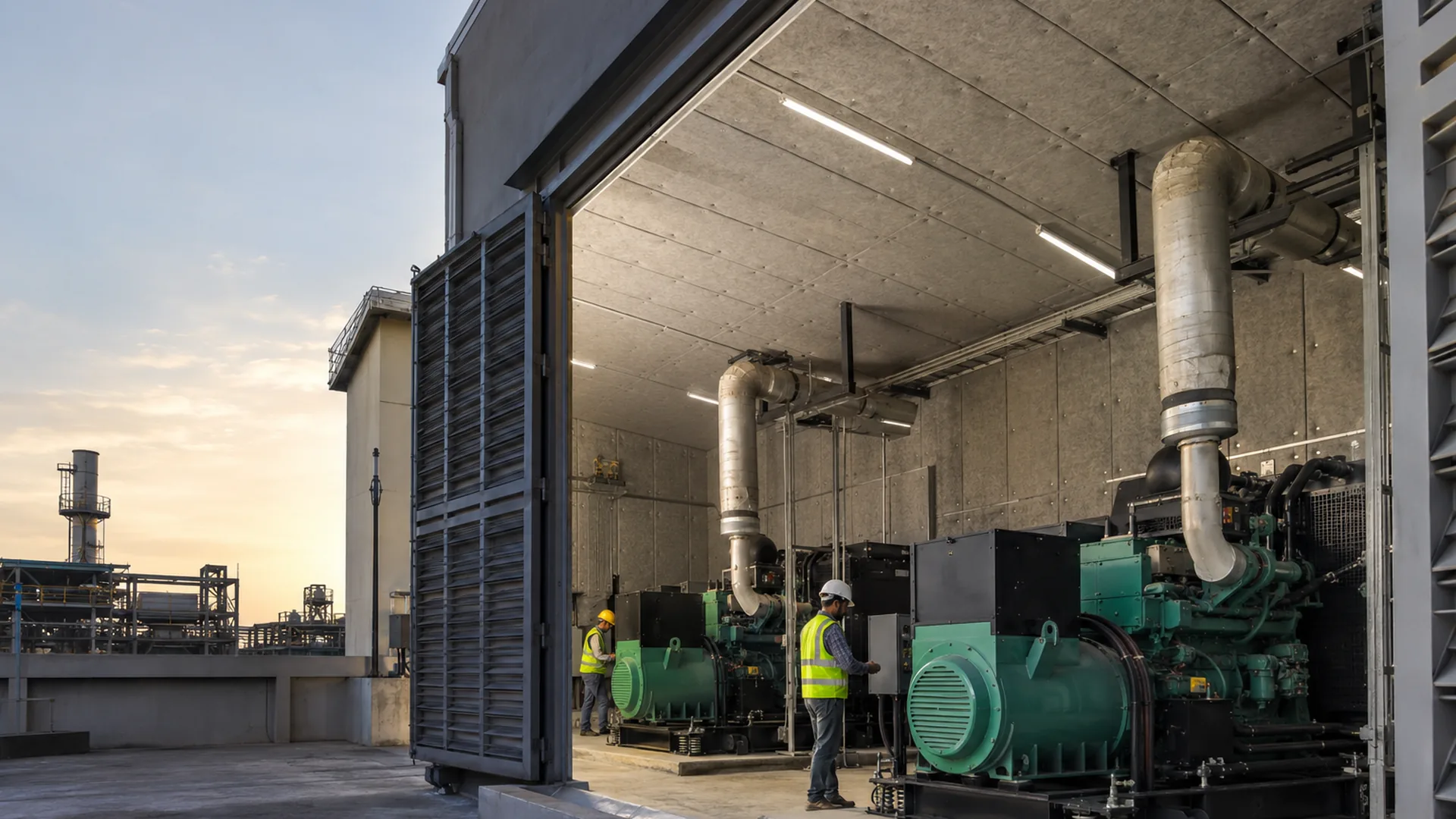
DG rooms, compressor houses, blowers and enclosures, built with something heavy to block the noise and something soft to soak it up.
Read more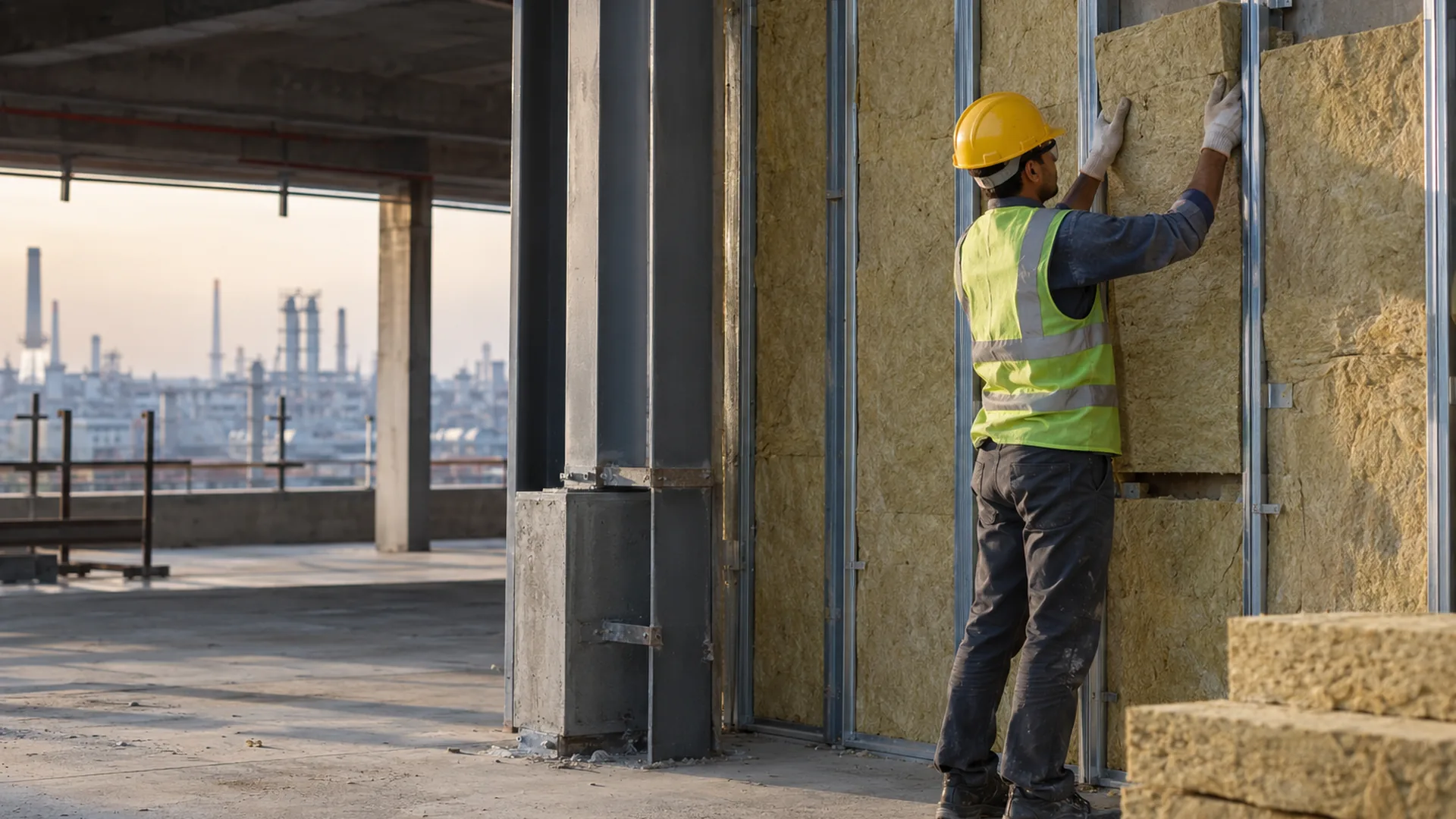
Walls, partitions, ceilings and facades in commercial and industrial buildings, picked for heat, sound and fire all at once.
Read more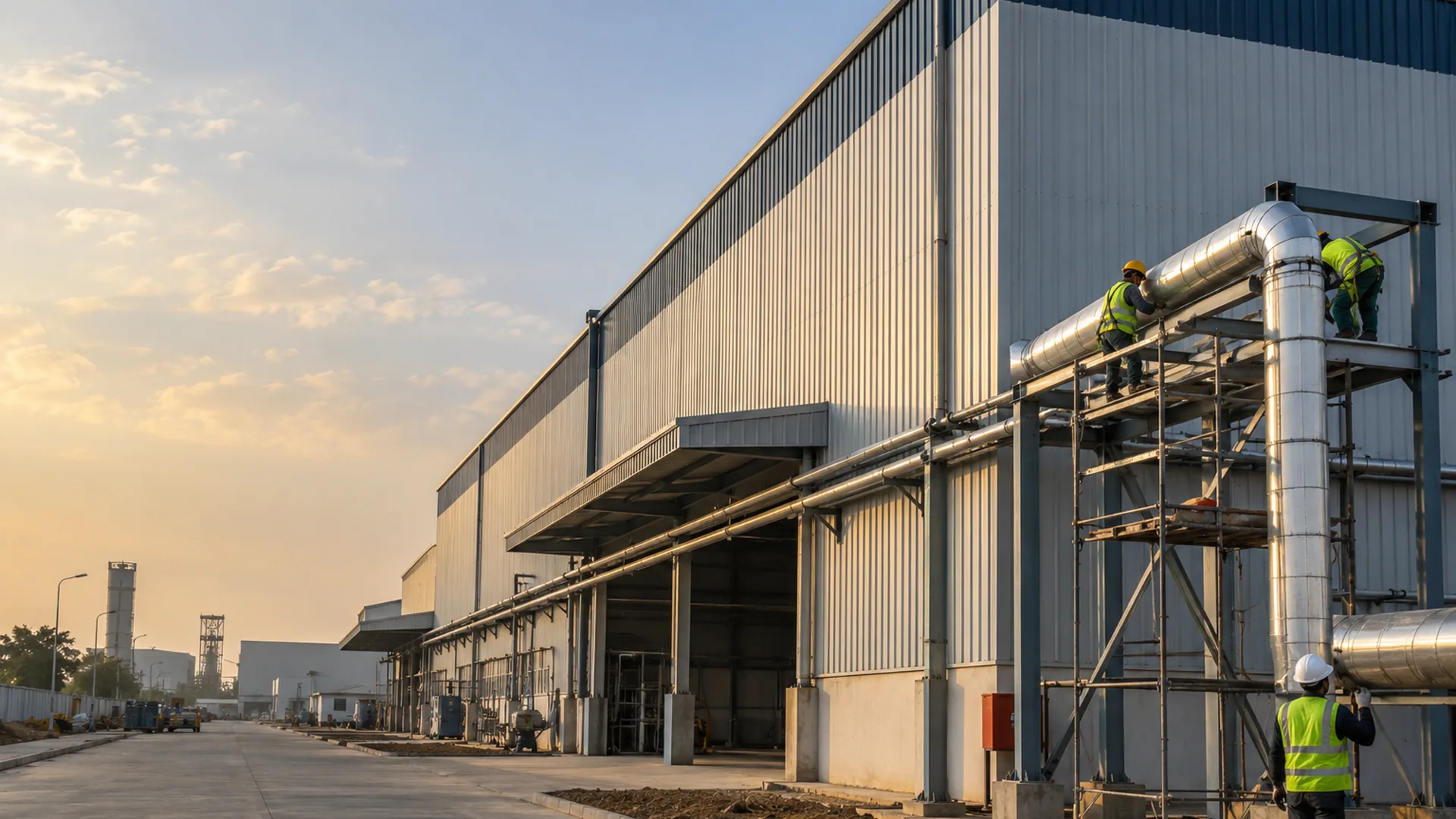
Roof and wall insulation for pre-engineered metal sheds, laid under the sheeting with a facing that stops the roof from dripping.
Read more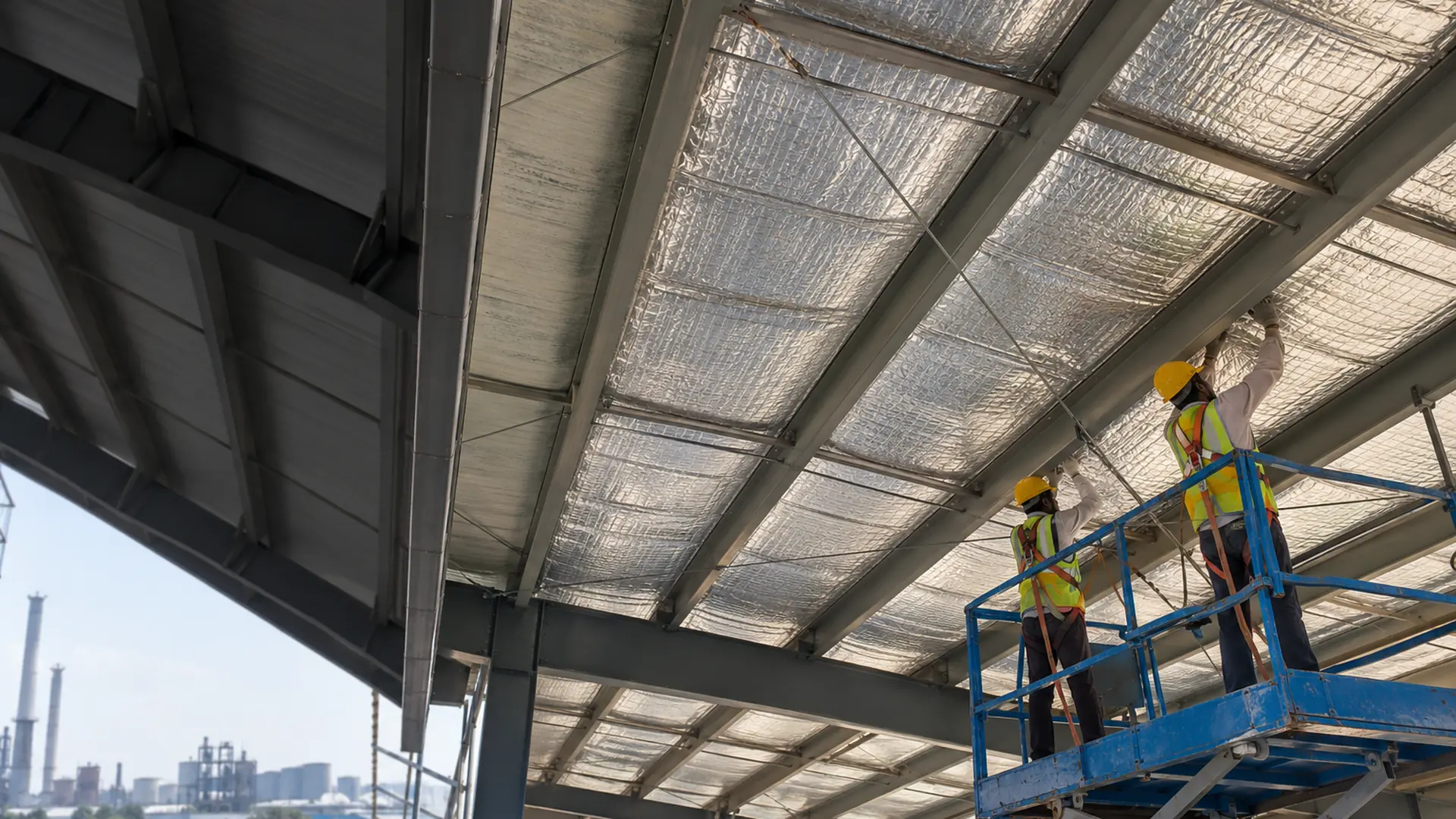
Foil faced wool or bubble fixed up under a roof that's already there, and usually without stopping the line below.
Read more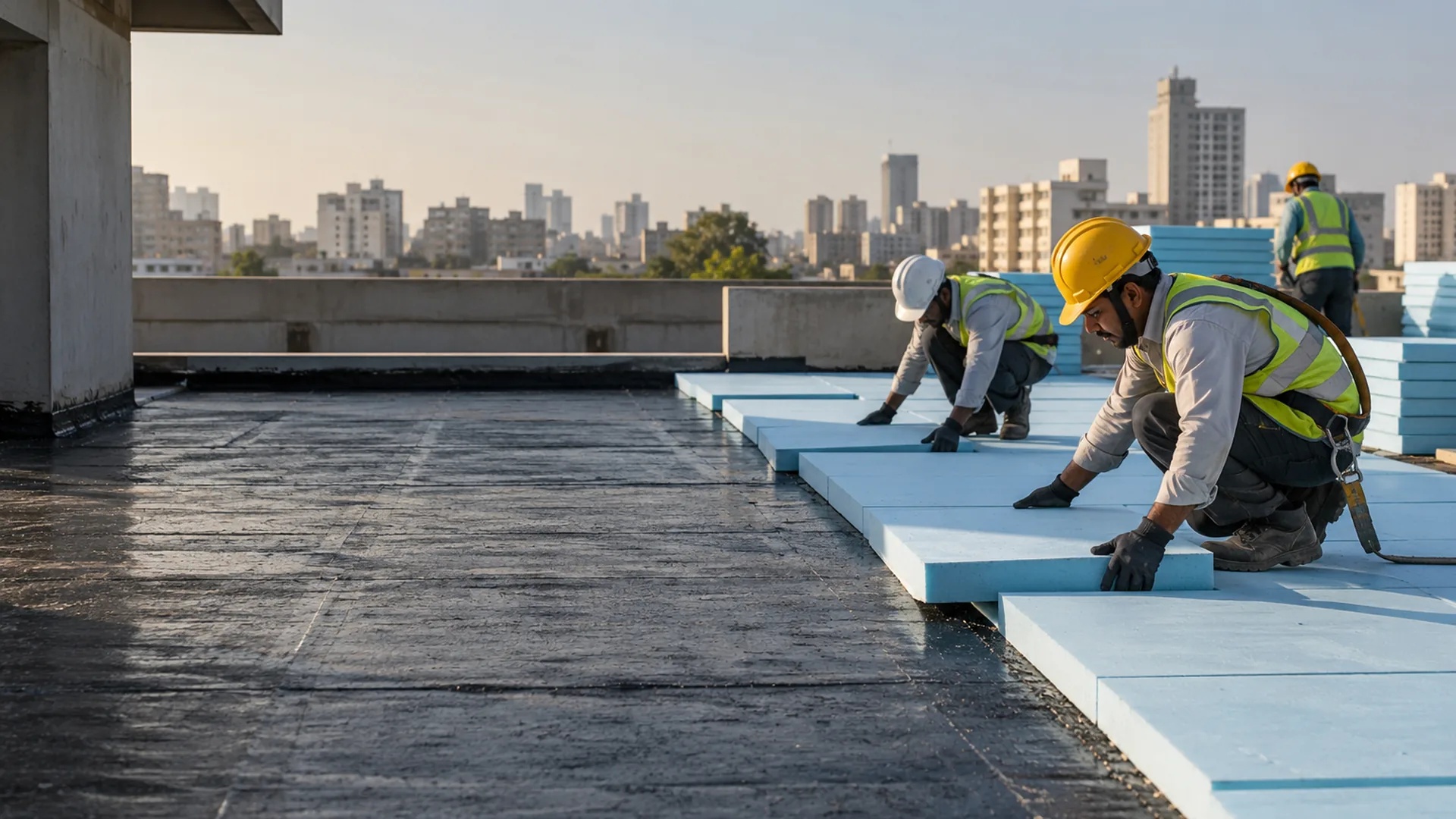
Boards laid on top of a roof deck or terrace and covered over, so the heat never reaches the slab in the first place.
Read more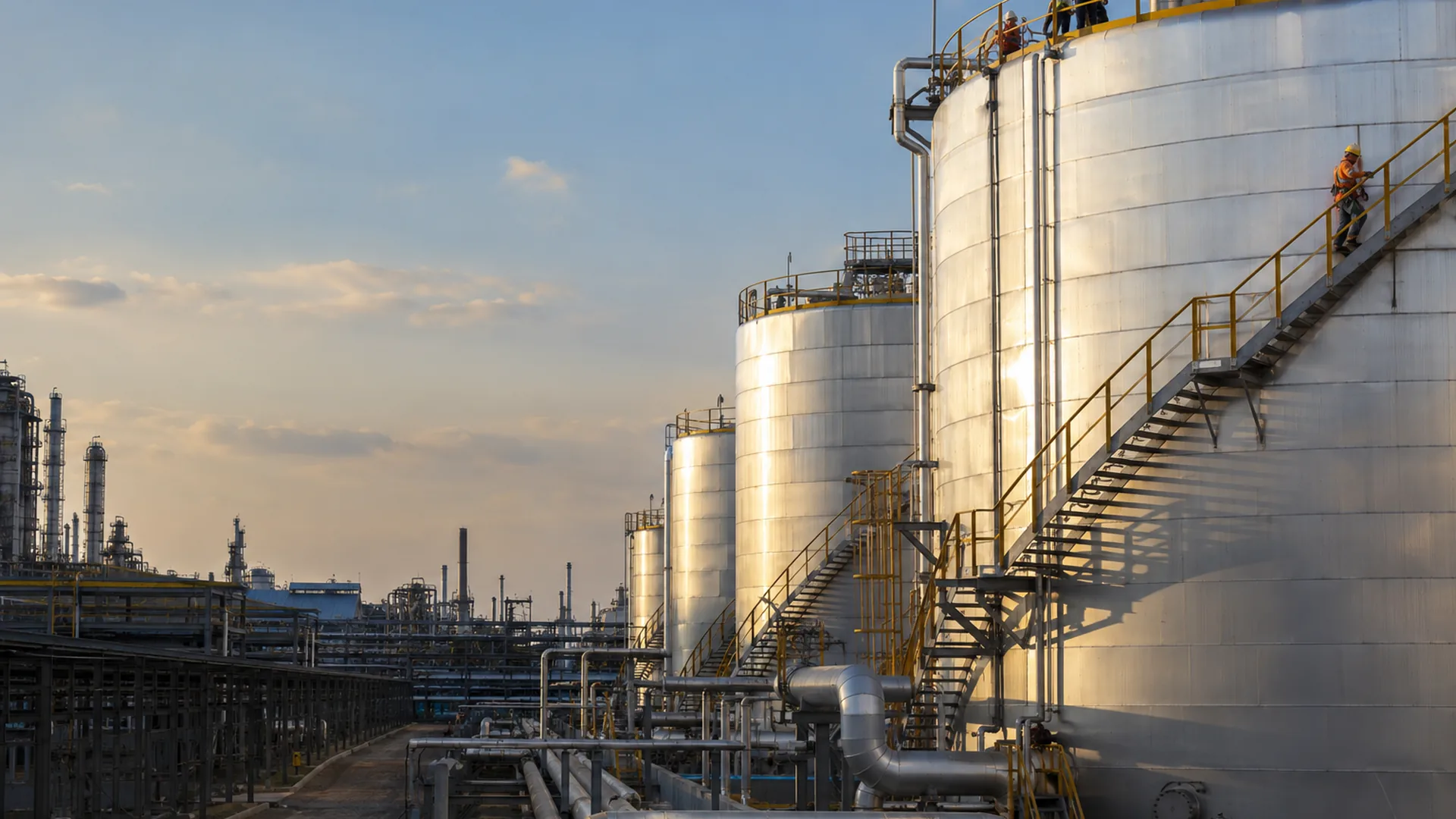
Our thermal insulation services for tanks, equipment and buildings, worked out from the operating temperature rather than guesswork.
Read more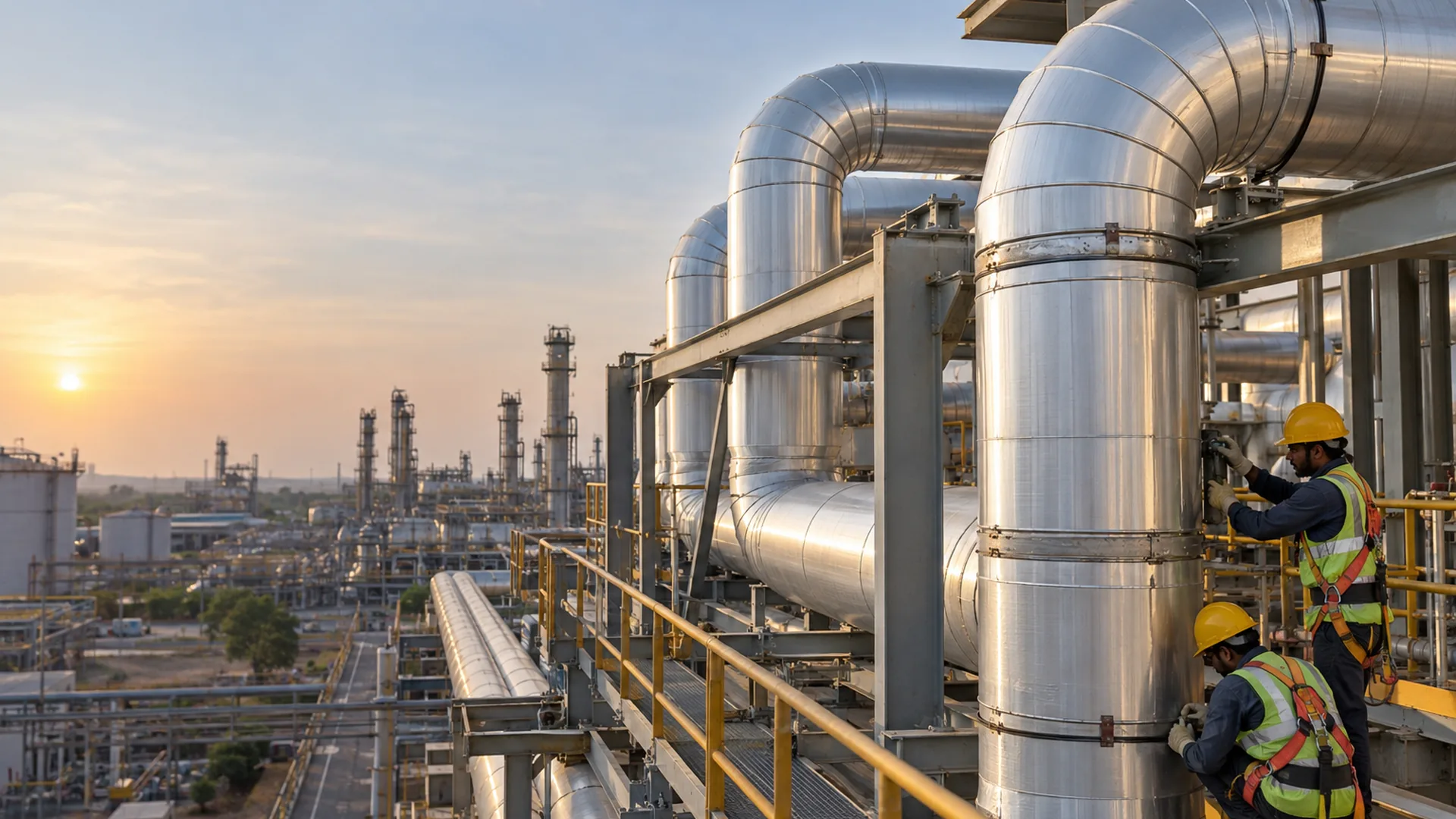
Aluminium, GI, PPGI and stainless jacketing with the bands, screws and sealant that keep the insulation dry under it.
Read morePlenty of our customers don't need our crew at all. EPC contractors and in-house maintenance teams often have their own applicators and just need the right material on site by Thursday. For them we're a supplier, working out of about 40,000 sq ft of stock split between Vatva GIDC in Ahmedabad and our Morbi warehouse. That covers 14 material groups, rockwool and nitrile through to cladding sheet, tapes and fasteners, from brands like Rockwool, Saint-Gobain, Armacell, K-Flex and Morgan.
For EPC contractors and maintenance teams with their own applicators.
When we supply and install, the spec and the rate come off the same desk. So if something fails there's no back and forth about whose layer it was. It was ours, and we fix it.
How we work, the same four steps on a single line or a plant-wide shutdown.
Someone from our side comes out, takes the line list, sizes, areas and operating temperatures, and notes what access and shutdown limits we're dealing with.
You get material, density, thickness and finish in writing, plus a rate and a start date you can actually plan around.
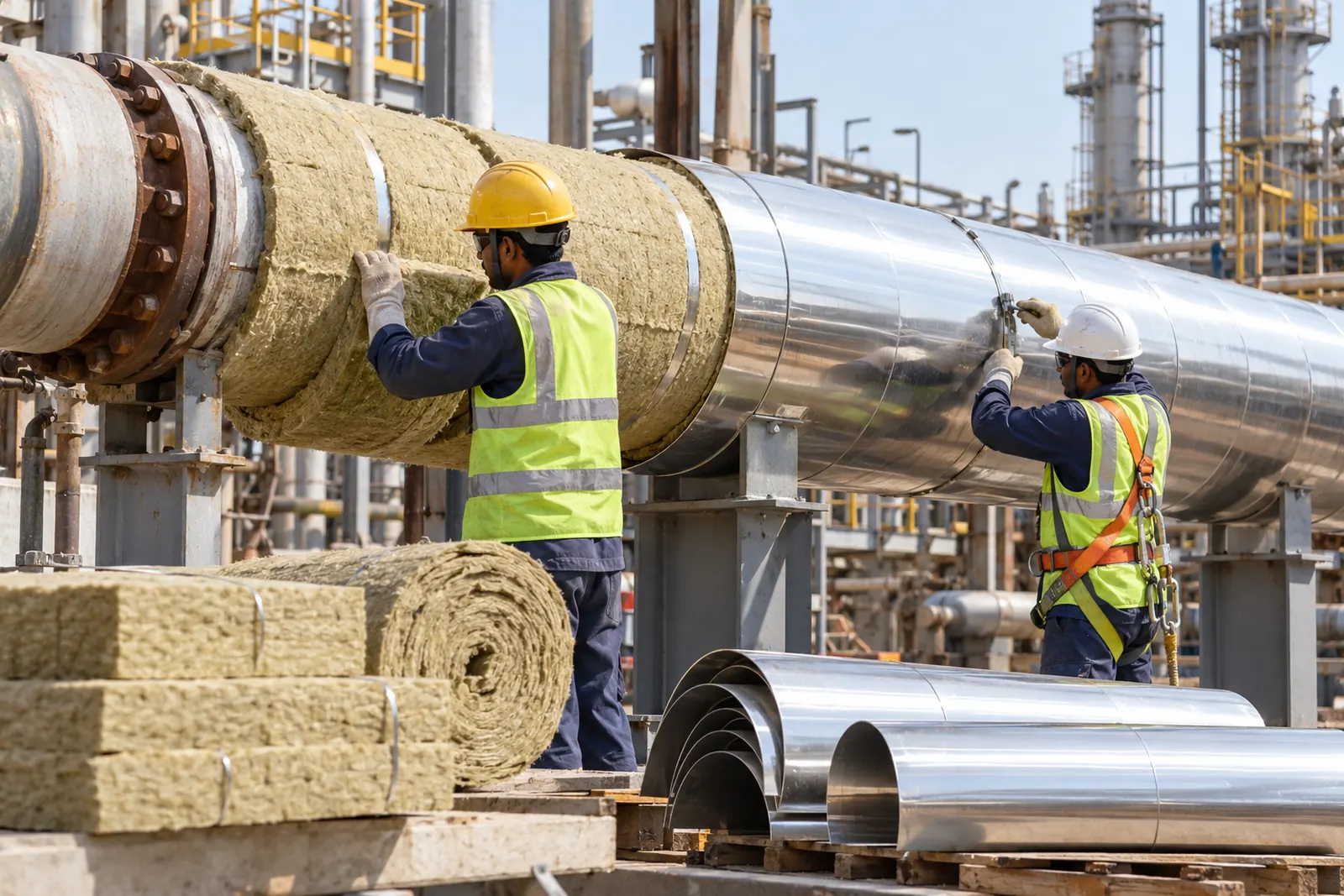
Material goes out from our own stock and our own insulation installers fit it, with a supervisor on every shift and night work if it's a shutdown.
At the end we measure jointly with your engineer, hand over photos of the finished work and give you the warranty on paper.
Operating temperature, vapour risk and shutdown windows differ by industry. Our estimators know all eight.
Comparing rates is the easy bit, whether you’re talking to industrial insulation contractors for a plant or commercial insulation contractors for an office block. What’s behind the rate is where quotes really differ, so before you sign with anybody (and yes, that includes us) it’s worth asking a few blunt questions:
If a quote can’t answer those, there’s a reason it’s cheaper. Most of the failed insulation we get called in to redo traces straight back to one of those six.

Anything else? Ask on WhatsApp and an estimator will reply.
Yes. We're based in Ahmedabad and Morbi but we supply and install all over India, so if you found us looking for insulation contractors near me from another state, it's still worth a call. For bigger jobs outside Gujarat we usually send a supervisor for the site visit first and plan the crew and material from what he finds.
Of course, a big chunk of our business is supply only. Send over the item list or the line list and we'll quote from stock, with the brand, density and thickness spelt out on the quote.
Pipe work normally goes by running metre, split by pipe size and thickness. Equipment, ducts and roofs go by square metre. At handover we measure together with your engineer, so the bill matches what both of you counted on site.
All the time, especially on hot insulation. We stage the material before the shutdown starts, roster the crew hour by hour and run nights so the scope is closed before the plant restarts.
Three ISO certificates, 9001:2015 on quality, 14001:2015 on environment and 45001:2018 on site safety. Copies are on our certifications page if your vendor team needs them.
Get it to us before 4 pm and you'll normally hear back that same working day. The proper written quote takes a bit longer, since we need sizes and temperatures first, but a line list, a drawing or even a few phone photos usually gets us there.
Sizes, temperatures and a handful of site photos on WhatsApp or through the form are enough. What you get back is a written spec and a rate, not a ballpark.
clients so far, from refineries and power plants to pharma and textile units