Rockwool
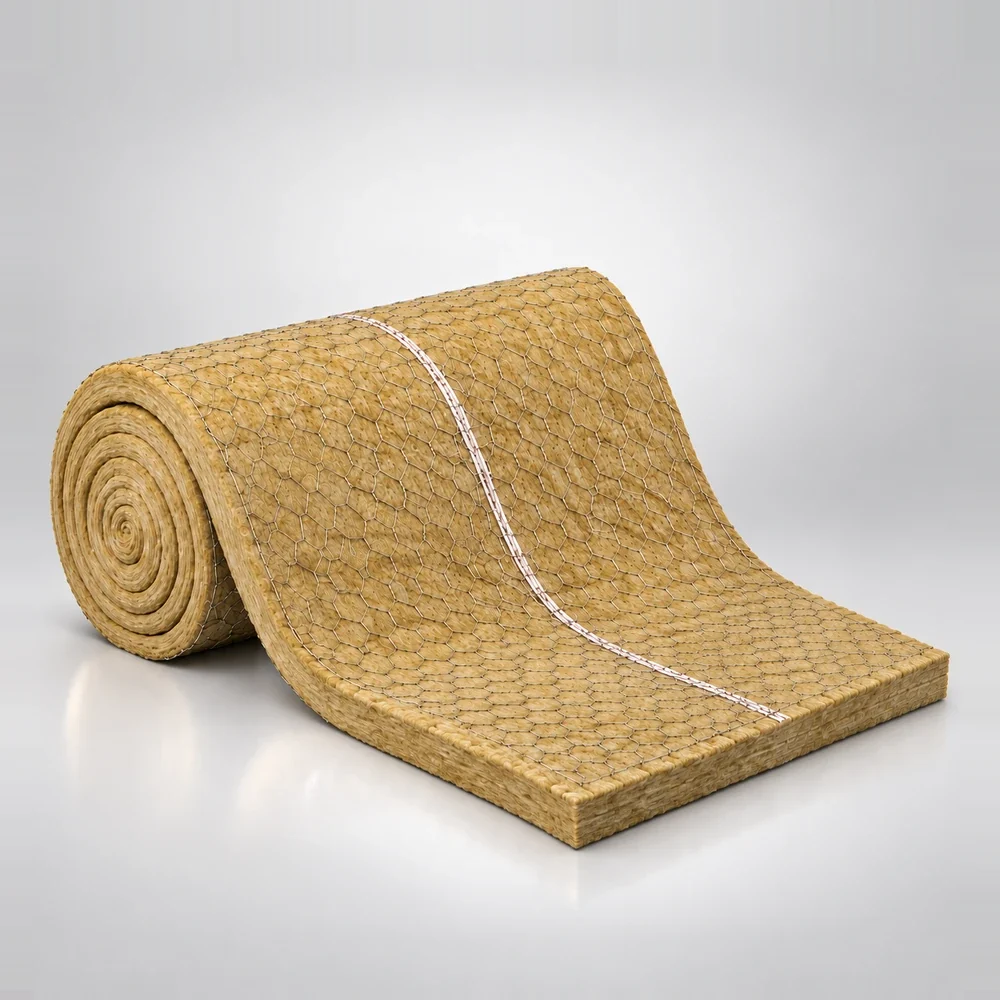
Our everyday material for steam lines, boilers, vessels, reactors, ESP and ducting.
- Rockwool LRB mattress
- Rockwool slab
- Rockwool pipe section
- LRB or slab with aluminium foil
- Pipe section with aluminium foil
- Loose rockwool
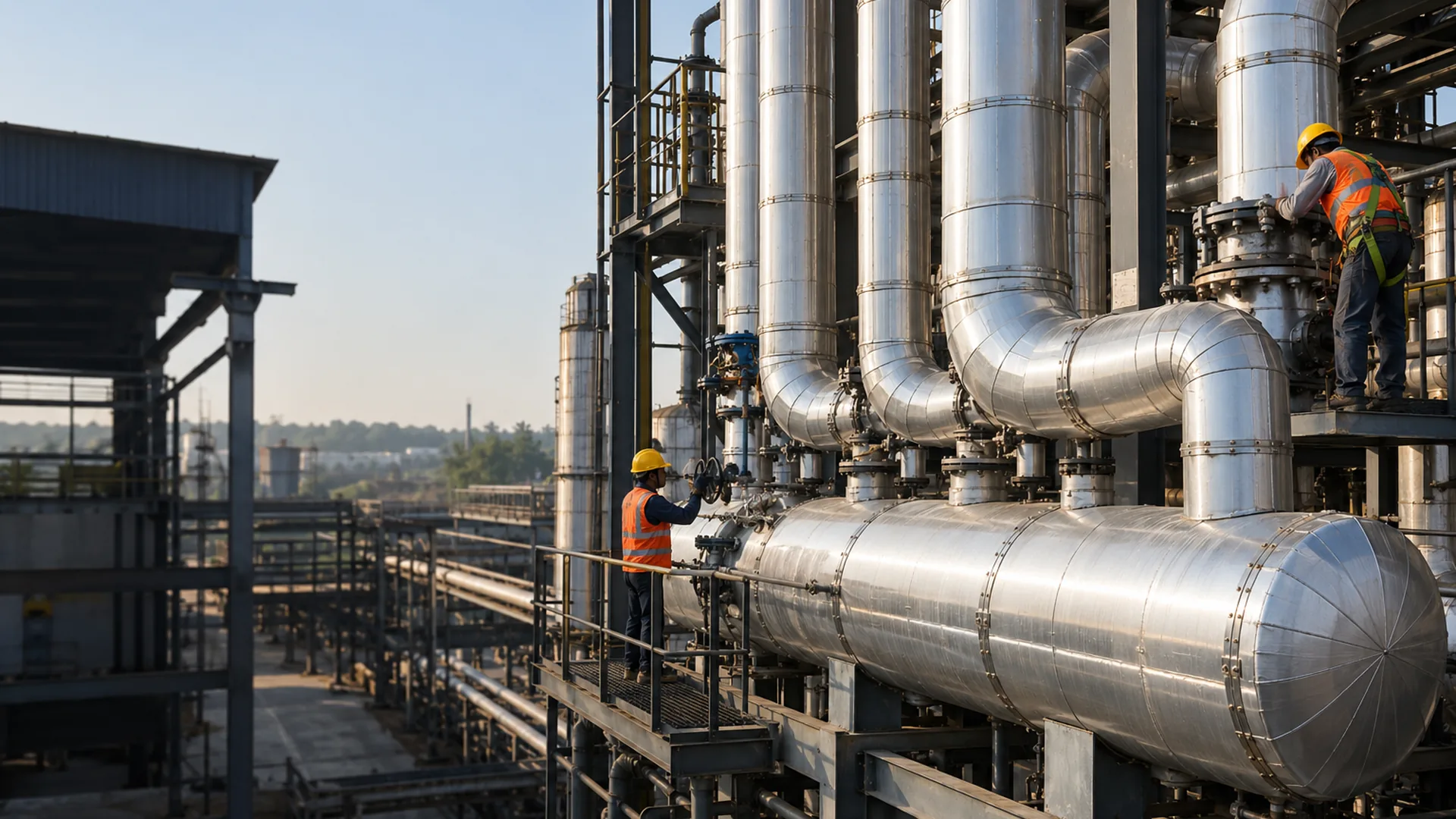
Keep the heat in the line where you paid for it, and keep your people's hands off a 200 degree pipe.
People usually ask us for a rate per metre. We'd rather ask what's running through the pipe. High temperature insulation is sized against the operating temperature, and two pipes of the same diameter can end up with very different systems once you know one carries condensate at 90 degrees and the other carries superheated steam. So the line list comes first, then the thickness that keeps the outer surface safe to brush against and the heat loss at a number your plant can live with, and only after that do we talk about which wool and which cladding will last where that line actually runs.
Get it wrong and nothing dramatic happens on day one, which is the problem. Poor steam pipe insulation quietly burns fuel twice, once to raise the steam and again to replace whatever the line leaked into the air. Hot metal burns people. And wool that's gone soggy under a split jacket is doing maybe a fraction of its job, while still looking fine from the walkway.
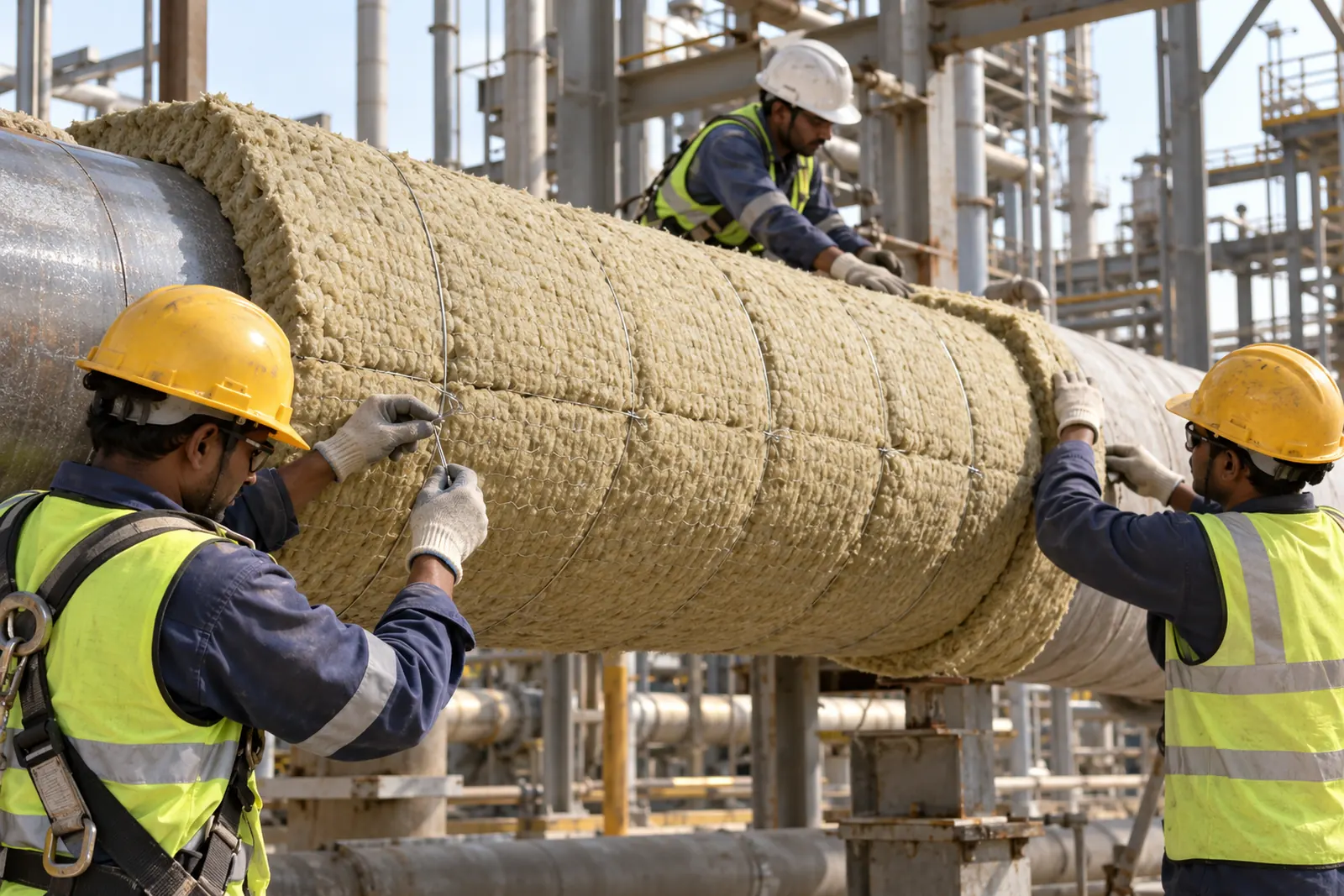
Here's the rough version of the chat our estimators have on pretty much every enquiry. The real upper limit depends on the grade and the brand, so we check the datasheet against your duty before anything is fixed.
| Material | Typical upper range | Where we use it |
|---|---|---|
| Fibre glass wool | Up to about 450 °C | Hot water, condensate and low pressure steam lines |
| Rockwool (LRB, slab, pipe section) | Up to about 750 °C | Steam lines, boilers, vessels, reactors, ESP and ducting |
| Ceramic fibre | Up to 1260 °C | Furnaces, kilns, flue ducts, spray dryers and expansion joints |
Our everyday material for steam lines, boilers, vessels, reactors, ESP and ducting.
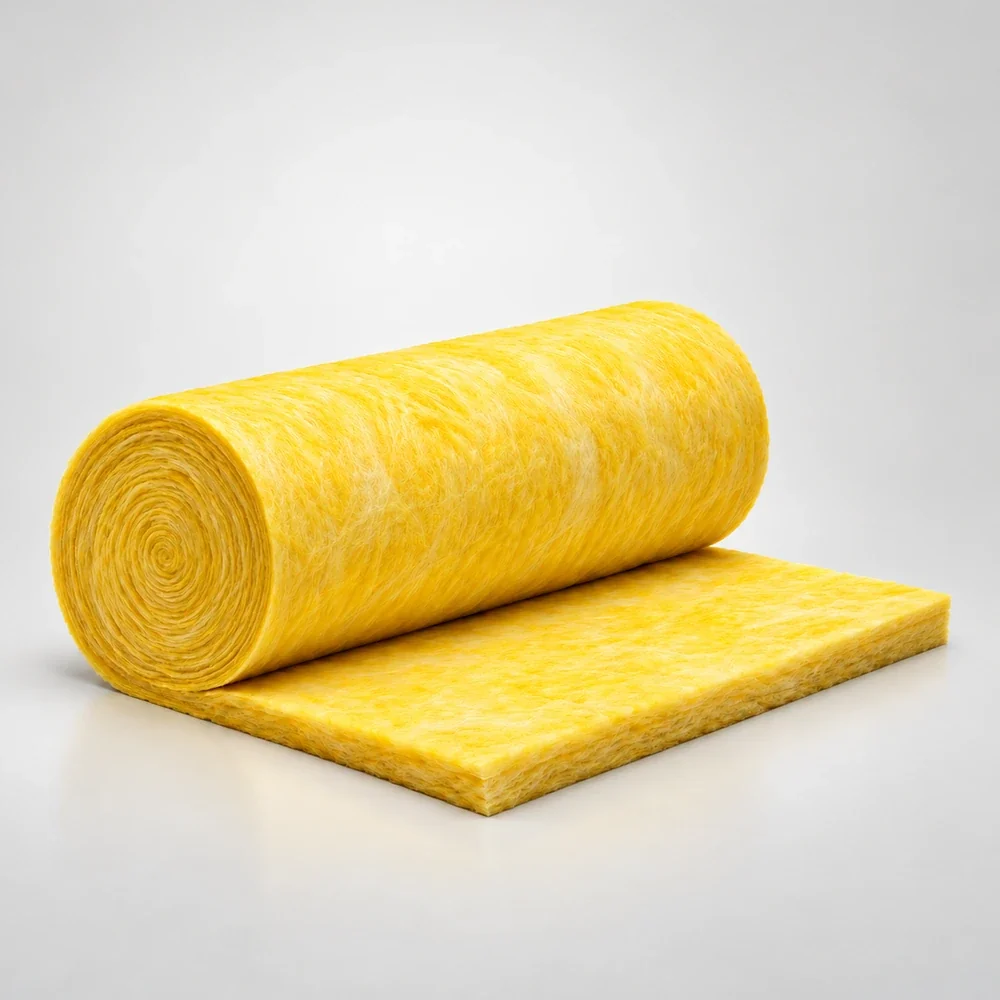
Good value on hot water, condensate and low pressure steam.
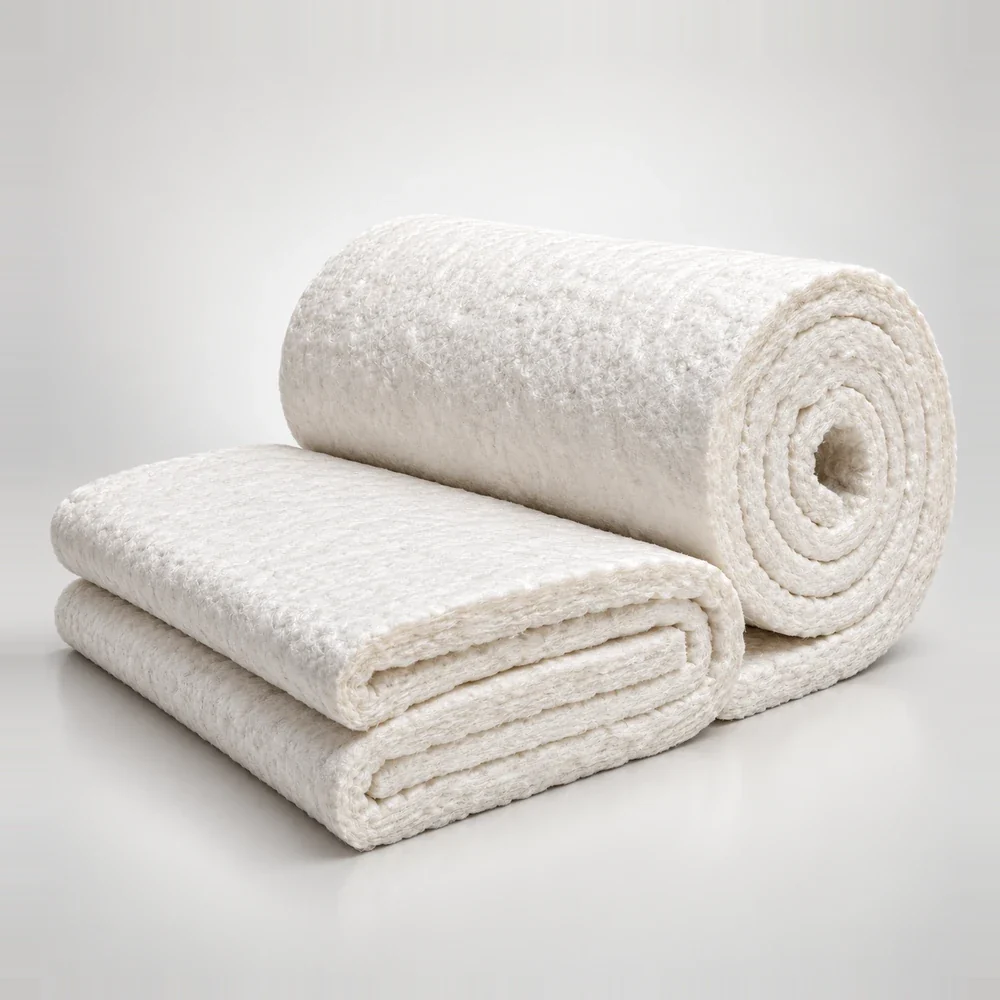
High heat insulation for the really hot stuff, like furnaces, kilns, flue ducts and spray dryers.
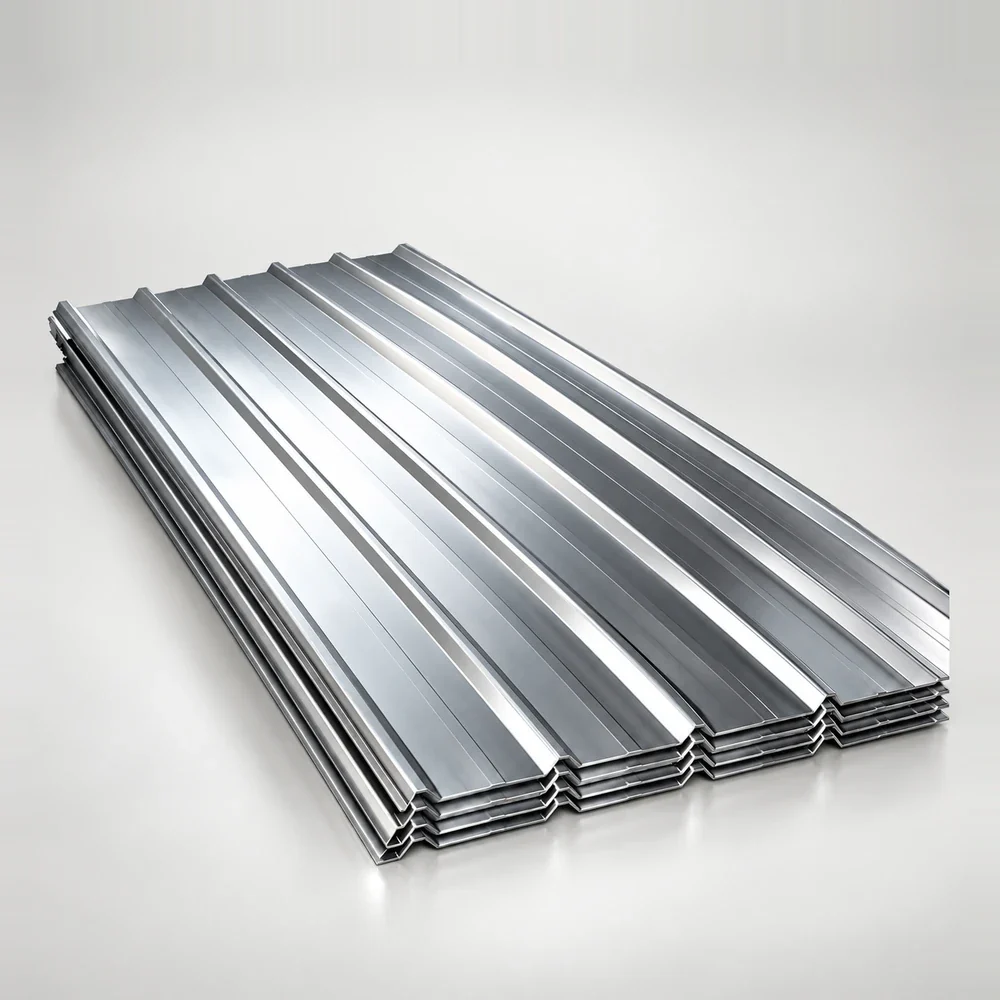
The metal jacket that keeps weather and knocks off the wool.
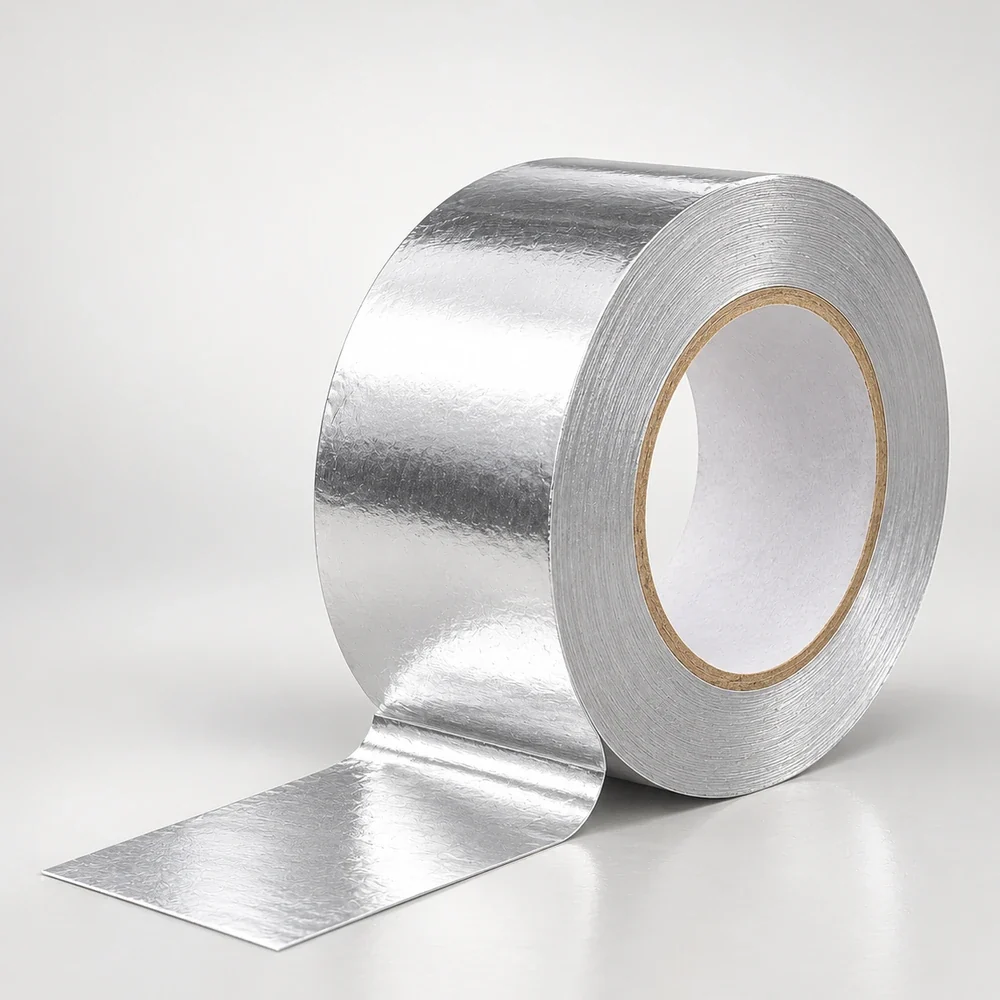
Bolts, screws, mesh and wire, the bits nobody notices until they're missing.
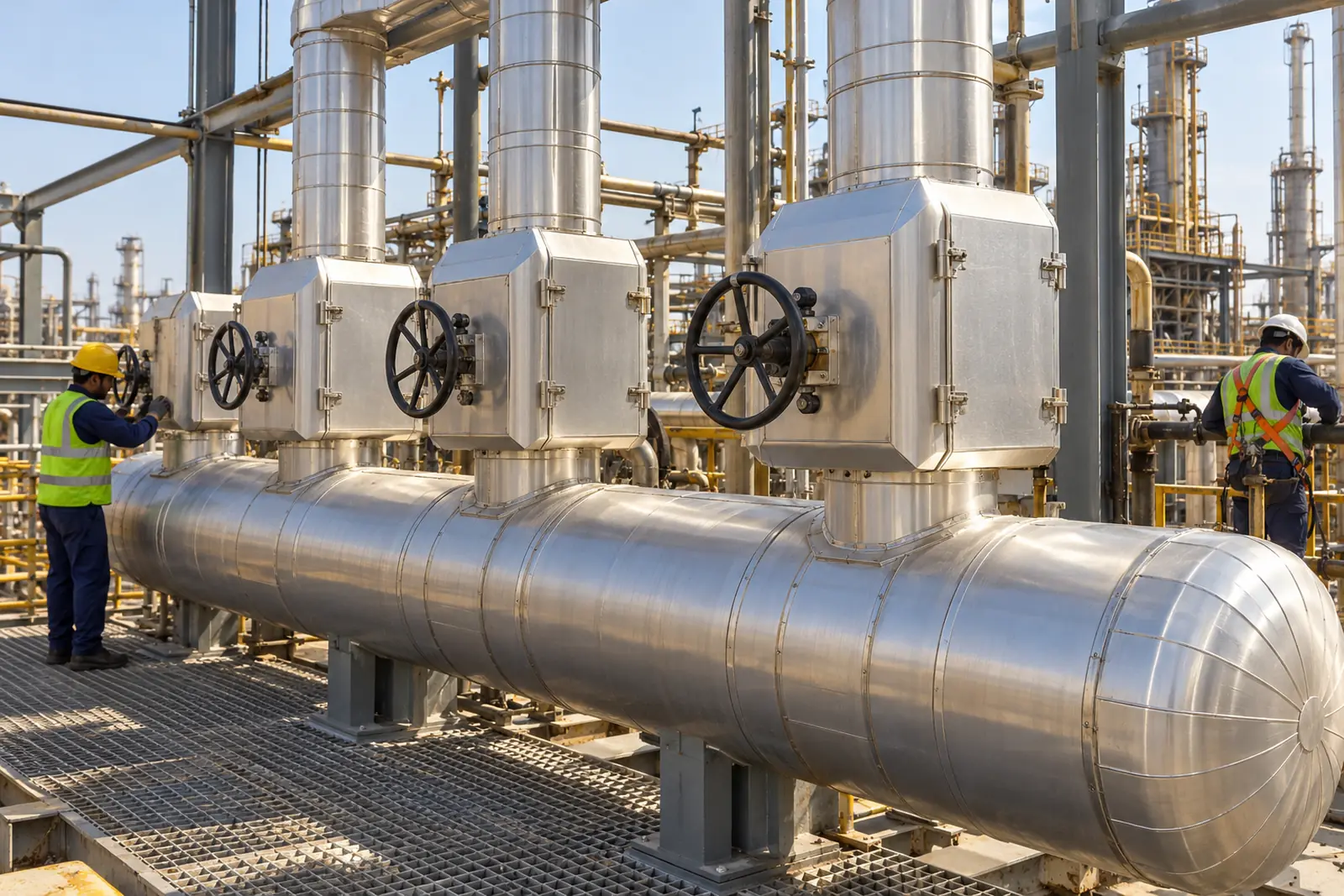
Boiler insulation and tank insulation look easy on a drawing. Then you get on site and start counting manholes, nozzles, flanges and valve bodies, and that's where most of the heat walks out and most of the rainwater walks in. We build removable boxes for valves and flanges so your maintenance team can open them up and close them again without ripping half the system off. Cladding laps point downhill. Joints get sealant and bands, not just a couple of screws and hope.
For high temperature pipe insulation out on the racks, honestly, the jacket matters about as much as the wool under it. For industrial pipe insulation we'd normally go with aluminium. GI makes sense down low where forklifts and spanners hit things, and stainless is worth the money where acids or daily washdown would chew through anything else. We'd rather settle that in the quote than argue about it once the sheet has already been delivered.
How we work, the same four steps on a single line or a plant-wide shutdown.
We walk the lines ourselves, note sizes, temperatures, fittings and access, and flag what can only be done in a shutdown.
You get the material, density, thickness and cladding for each line in writing, along with the rate and the dates.
Wool, sheet and fixings come out of our own stock and our crew fits them, with night shifts lined up if it's shutdown work.
We measure it jointly with your engineer, hand over photos of the finished lines and give you the warranty in writing.
Still unsure? Send us the duty and a few photos and we will tell you what we would fit.
Honestly, it depends on the heat. Rockwool covers most steam and process lines up to about 750 °C, glass wool is fine lower down, and for furnaces and kilns you'd move to ceramic fibre, which goes up to 1260 °C. Where the line sits, indoors or out on a rack, matters too.
There isn't one magic number. It comes down to the steam temperature, the pipe size, how hot you're okay with the outside getting and how much heat loss you'll accept. We work it out line by line, since putting 100 mm on a small branch is wasted money and putting 50 mm on a big header is wasted fuel.
Because wool only insulates while it's dry and holding its shape. The aluminium, GI or stainless jacket keeps rain, washdown water and the odd boot or spanner off it. Leave an outdoor line unclad and you'll see the difference after a monsoon or two.
Yes, and you should. We make removable boxes for valves, flanges and similar fittings, so they open for maintenance and close back up without anybody having to redo the insulation.
We do, quite a lot of it. Material gets staged before the shutdown starts, crews are rostered shift by shift, and the aim is always to close the scope before the window does.
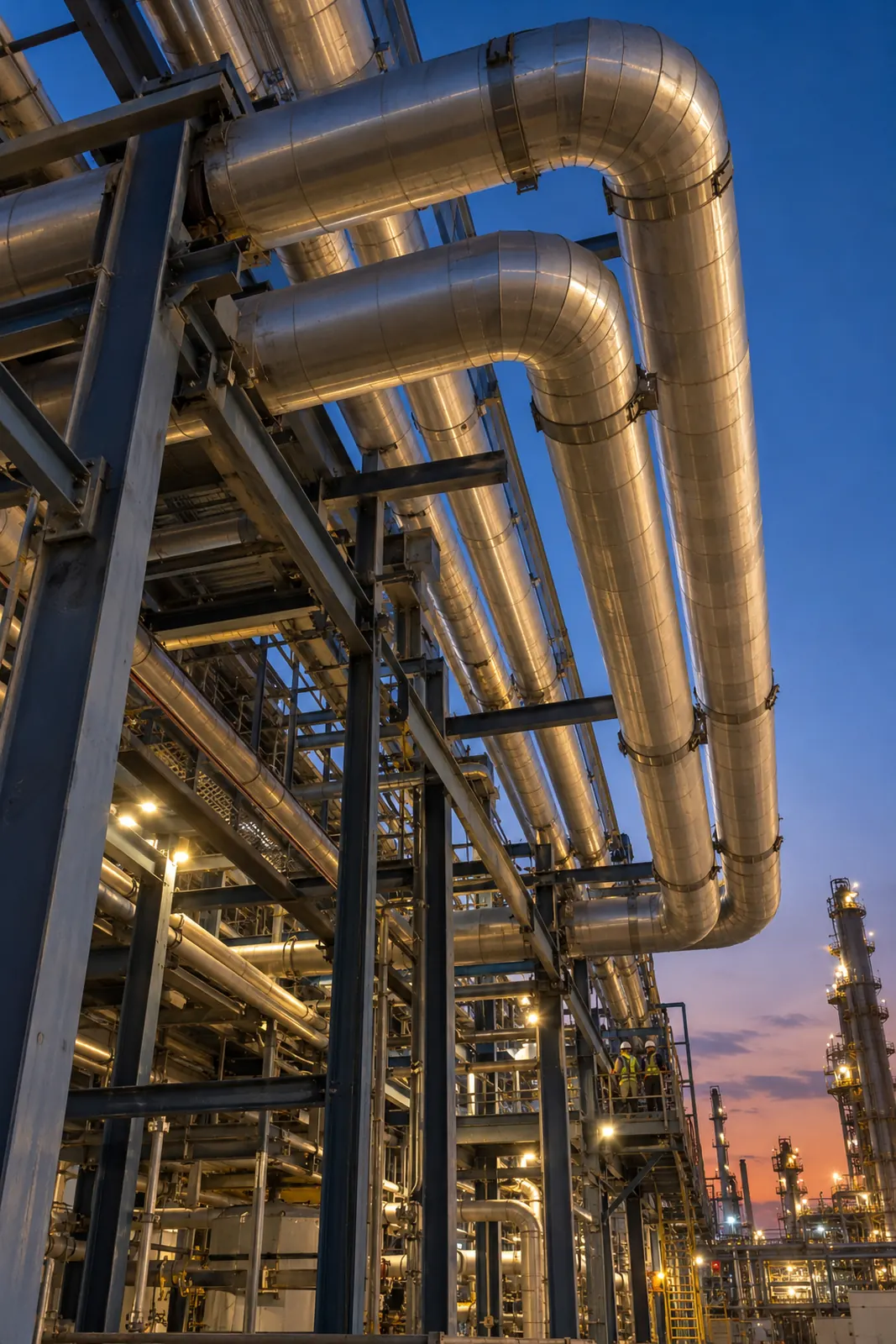
Pipe sizes, temperatures and a few phone photos are plenty to start. We'll come back with the material, thickness, cladding and a rate in writing.
clients so far, from refineries and power plants to pharma and textile units