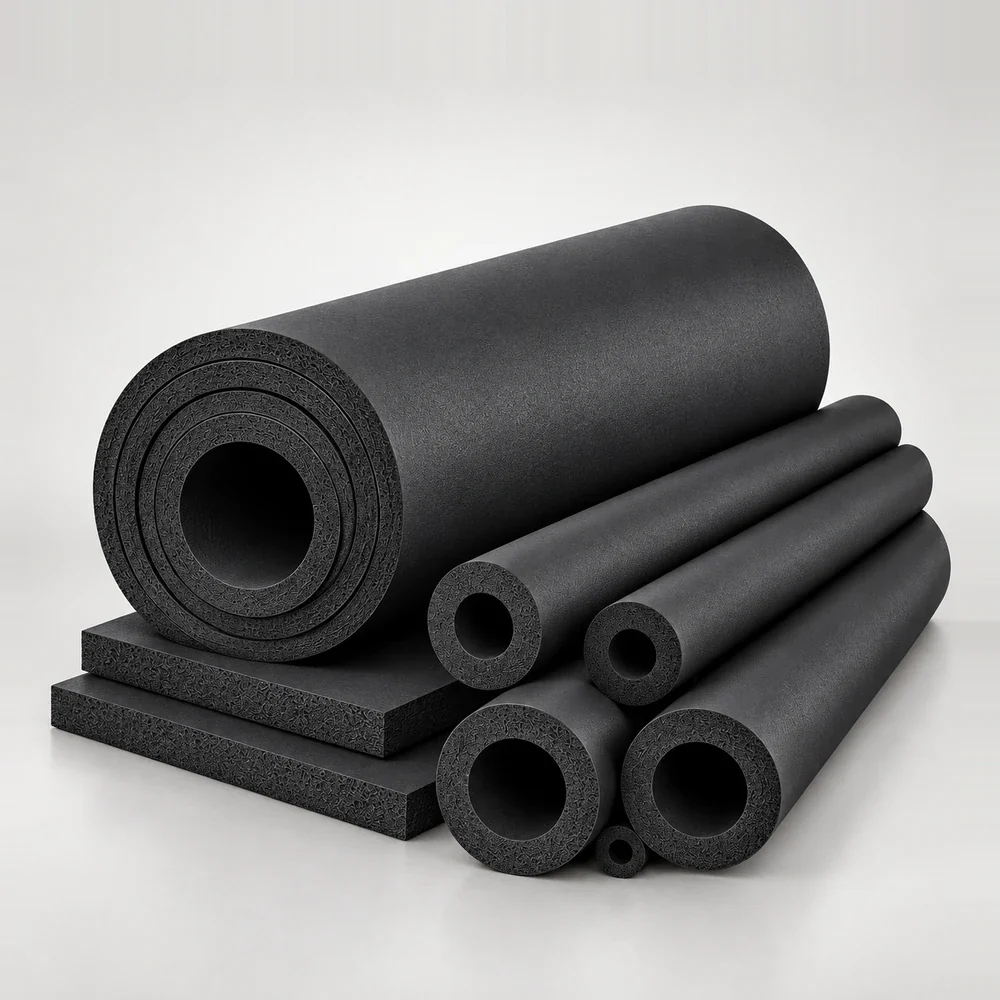
Nitrile rubber insulation
What we reach for first on most chilled water and refrigeration lines.
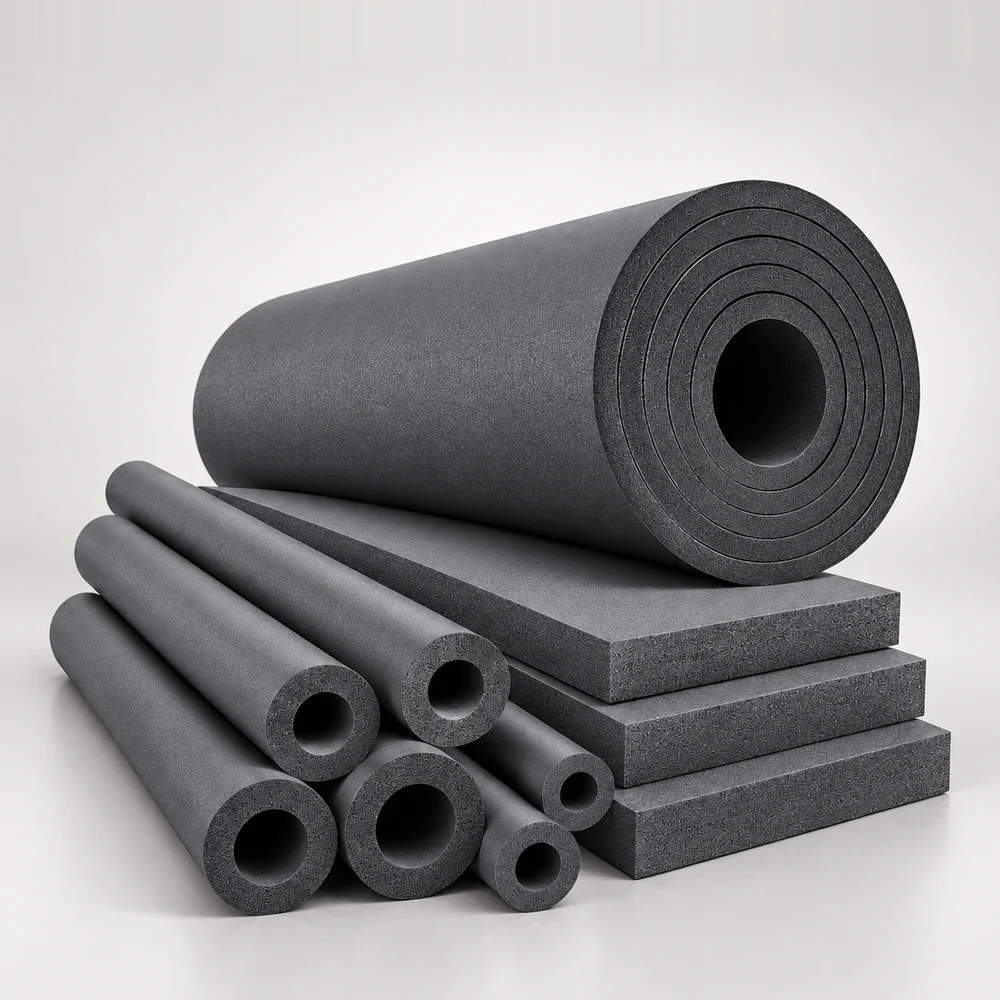
- Nitrile rubber tube
- Nitrile rubber sheet
- Nitrile rubber with facing

Nitrile, PUF and PIR on chilled water and refrigeration lines, with the seams glued and taped by our own crew.
We tell new site engineers this on day one. A hot line is forgiving, a cold line isn't. Air near a chilled pipe is nearly always warmer than the pipe, certainly in Ahmedabad between May and September, and the water in that air condenses on whatever cold surface it touches first.
If there's a gap next to a clamp, air gets in there and water starts forming under the insulation. Wet insulation insulates worse, so the surface gets colder and you get more water. We've seen it end in stained ceilings, mould and rusted pipe within a season or two, with the chiller running longer than it used to. We've opened up systems like that in cold stores and pharma plants, and nine times out of ten it's the joints, not the material.
So on our cold jobs the barrier gets more attention than anything else. Closed-cell material, glue on every seam, tape on top of the glue, PUF supports where there would otherwise be a bare metal clamp. And the crew spends as long on a valve or a tee as on ten metres of straight pipe, because that's where the trouble always starts.


What we reach for first on most chilled water and refrigeration lines.
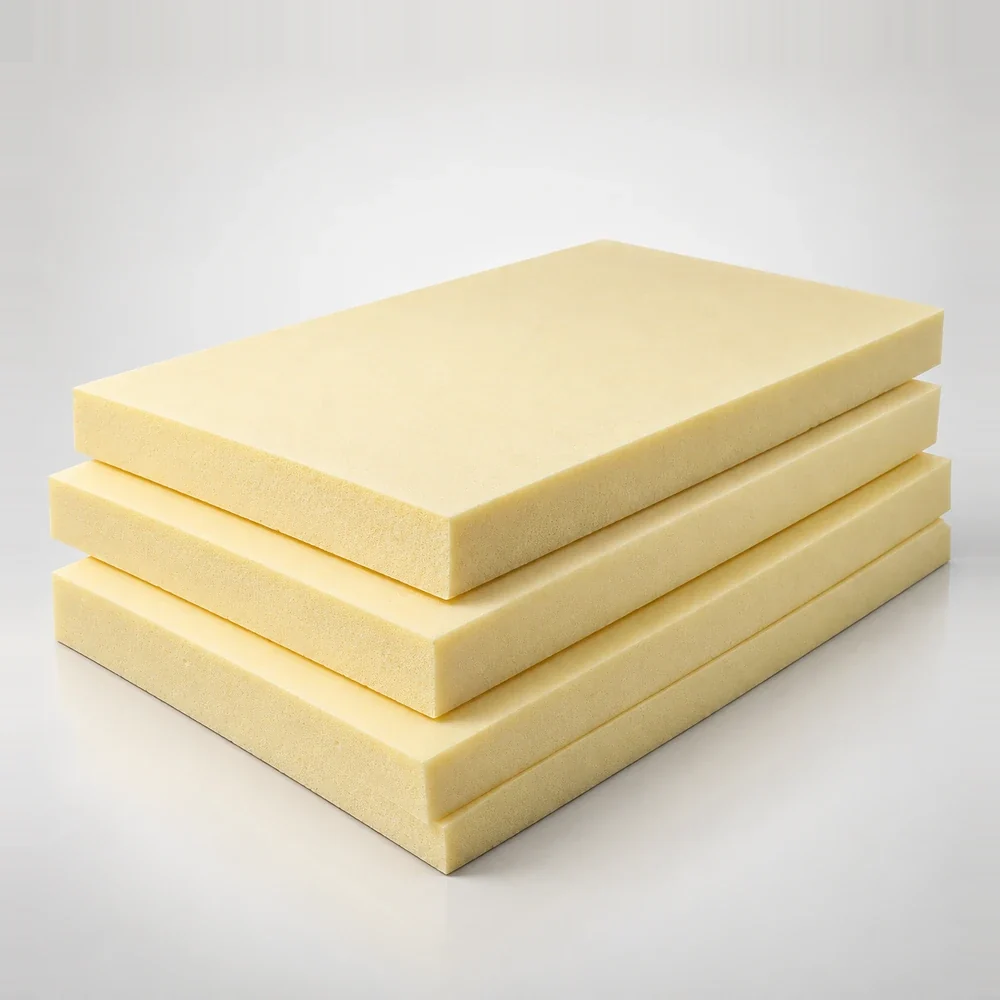
Big chilled headers and cold stores, where you need a lot of insulation in not much space.
The small stuff that keeps the vapour barrier in one piece.
With refrigeration insulation and other low temperature insulation, the thickness goes up and there's far less room for sloppy work. A small gap on a chilled water line drips. That same gap on a sub-zero line can ice up, crack the insulation and spread along the pipe. That's why we put PUF supports at every clamp on these lines, so there's no bare metal path from the cold pipe to the hanger.
PUF pipe line insulation (plenty of people search for it as puff pipe line insulation) is popular on big headers and cold store networks because it packs a lot of insulation into each millimetre. Nitrile rubber is easier to fit tidily around small pipes and fittings. On quite a few industrial pipe line insulation jobs we end up using both, each where it suits.
On a 6,000 tonne cold store in Morbi, for example, the chilled water network ran from 40 mm to 200 mm lines, all in nitrile rubber with a continuous vapour barrier, insulated pipe supports and the panel room details done alongside.
How we work, the same four steps on a single line or a plant-wide shutdown.
We note line sizes, fluid temperatures and the ambient conditions, and we look at every support, valve and fitting along the run, not just the pipe.
Thickness is picked so the outer surface stays above dew point at your site, and the support and sealing details are written into the quote.
Material comes from our stock, every seam gets glued and taped, and insulated supports go in as the crew works along the line.
We do a joint measurement, hand over photos of the joints and supports, and give you the warranty in writing.
Still unsure? Send us the duty and a few photos and we will tell you what we would fit.
The direction the heat's going, mostly. On a hot line it's trying to get out, on a cold one it's trying to get in and it drags moisture along with it. That's why cold work uses closed-cell material and a barrier we try very hard not to break.
For most buildings and plants we'd go with nitrile rubber, since it's closed cell and goes on neatly round small fittings. Big headers and cold stores are where PUF or PIR tends to earn its place. Line size, temperature and location settle it.
Most often the insulation's too thin for how humid your site gets, or the barrier's opened up somewhere, usually at a joint, a support or a valve. We'd find those spots, cut out whatever's gone wet and reseal it properly.
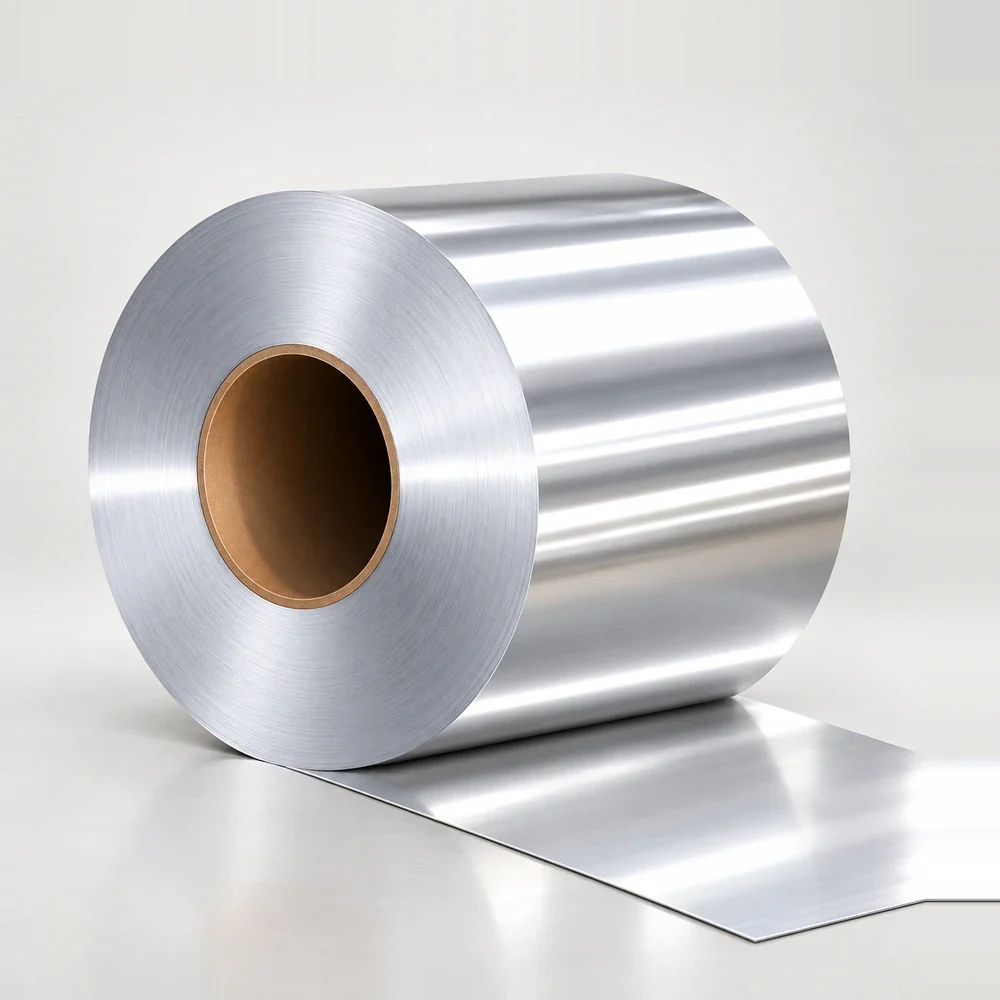
Outdoor and exposed ones do. An aluminium or GI jacket protects the insulation from sun, rain and knocks. Lines inside plant rooms are often left with just the insulation surface or a facing.
Yes. We handle cold room panels, the brine and refrigeration lines, and the pipe supports and jointing that go with them.

Line sizes, temperatures and a few photos of the worst spots are enough. We'll tell you what's failing and what it'll take to put it right.
clients so far, from refineries and power plants to pharma and textile units